Have you ever wondered how a bouncy ball could change your workout routine? A Bosu ball brings a playful twist to your exercises, helping you build balance, a strong core (the muscles in your stomach and back that keep you stable), and overall stability. It makes every movement a little more fun and gives your muscles a good challenge, turning everyday exercises into something more dynamic. In our article, you'll find clear, easy steps to help you try this new way of moving and keeping fit. So, why not give it a shot and see how you can improve your coordination while challenging your body in exciting new ways?
Comprehensive Bosu Ball Exercise Routines for Balance, Core Strength & Full-Body Activation
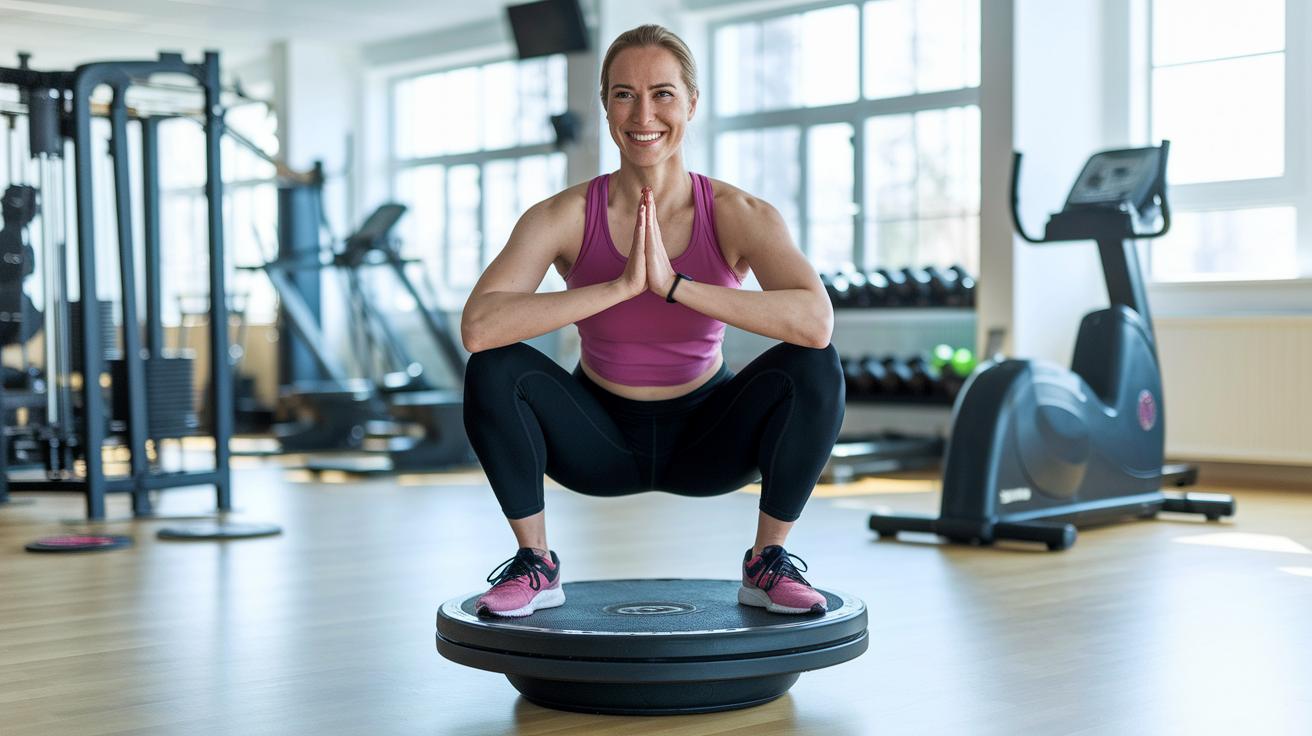
Bosu ball workouts are a fun way to boost balance and strength all over your body. When you work on this wobbly surface, your muscles have to work harder to keep you steady. It’s like turning everyday movements into a playful challenge that sharpens your coordination and tones your muscles. This style of exercise is great for anyone who wants to add a new twist to their routine.
Here are some simple tips to keep in mind when you exercise on the Bosu ball. Hold your core tight and keep your spine straight while standing with your feet shoulder-width apart. Bend your knees just a bit to take the edge off the wobble. And if an exercise feels too hard at first, try an easier version until you get more comfortable with the ball. These little adjustments make sure you’re working safely and getting the most out of each move.
- Bosu Ball Bridge: Lie on your back with your feet on the ball and lift your hips. This move works your glutes, hamstrings, and lower back.
- Single-Leg Glute Bridge: Do the bridge one leg at a time to give your glutes and hamstrings an extra challenge.
- Bosu Ball Plank: Hold a high plank with your body in a straight line to build core strength and tone your shoulders.
- Side Plank: Stack your feet and lift your hips to target your obliques and shoulders.
- Bosu Ball Crunches: Crunch over the ball to focus on your abs and hip flexors.
- Bosu Ball Push-Up: Place your hands on the ball for a dynamic push-up that tones your chest, triceps, and core.
- Bosu Ball Mountain Climber: Alternate driving your knees toward your chest to give your core and hip flexors a good workout.
- Bosu Ball Squat: Let the ball support your feet as you squat to strengthen your quads and glutes.
- Bosu Ball Burpee: Combine a jump with a push-up for a full-body challenge that gets your heart pumping.
- Bosu Ball Side Hop: Hop laterally over the ball to work your hip abductors and calves.
Together, these moves build solid core stability and muscle control while adding a burst of variety and fun to your workout routine.
Beginner-Friendly Bosu Ball Sequences: Stability Platform Training Guide
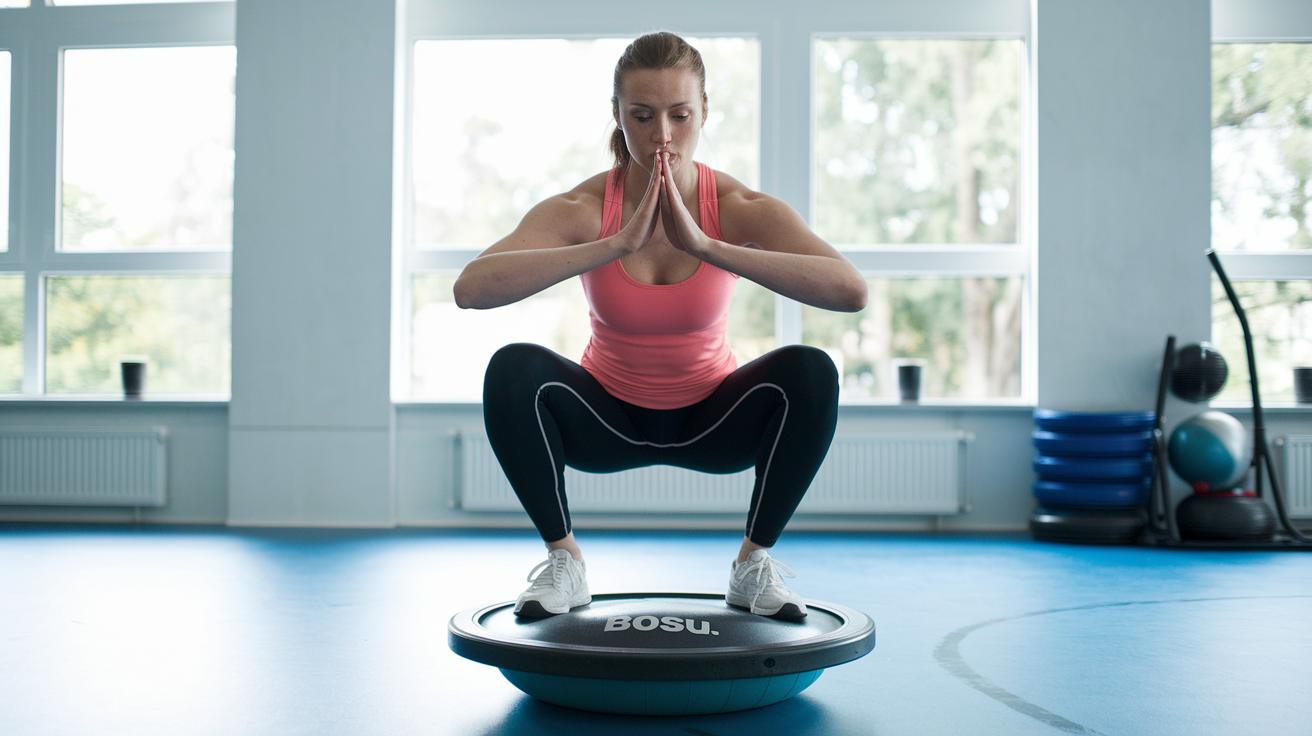
Start by getting comfortable with your Bosu ball. This cool piece of equipment has a half-sphere dome on one side and a flat, stable platform on the other. Stand with your feet about shoulder-width apart, keep your core tight, and bend your knees slightly. This helps you absorb any wobbles and keeps your body safe.
Now, let’s try five simple moves. First, hold the dome side up and do some squats. This not only challenges your legs but also helps you find your balance. Next, try mountain climbers with the dome still up. This move wakes up your core and gets your heart pumping.
Flip the Bosu so the dome faces down, then do plank jacks. This change makes your workout more interesting as you test your stability further. After that, do knee pull-ins with the dome still down, focusing on tightening your abs with each careful move. End with a lunge and press. If you have resistance bands, toss them in to boost your upper body workout a bit, too.
As you build confidence, you can make these moves a bit tougher by adding extra repetitions or shortening your rest breaks. If any move feels too challenging, try a smaller range of motion or move a little closer to the ball. Keep experimenting until your balance and strength steadily improve.
Bosu Ball Exercise Routines: Boost Your Balance
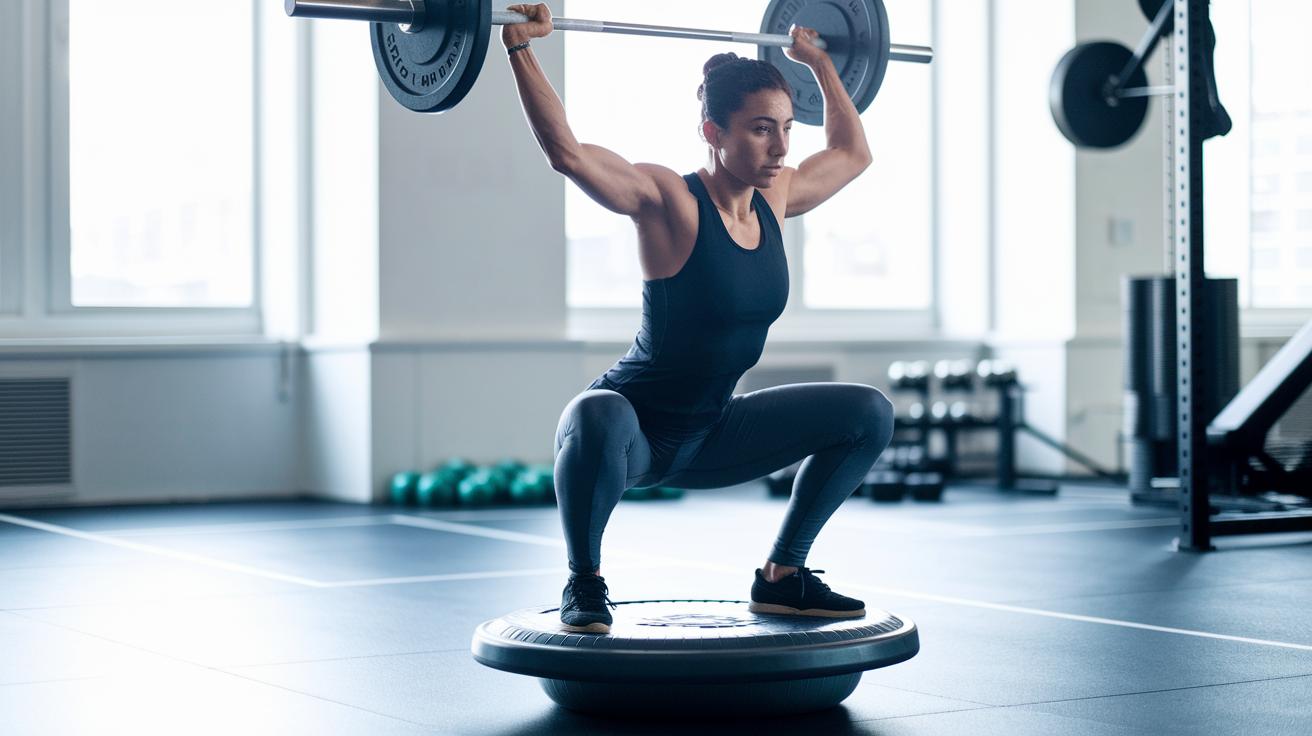
High-intensity balance circuits give your whole body a fun challenge by forcing you to work on unstable surfaces. Every exercise makes your stabilizer muscles work extra hard, which boosts the connection between your brain and muscles. Think of it like a surfer riding gentle, ever-changing waves, each move helps you adjust your balance in real time.
Try these three dynamic strength routines:
- Side Squat to Overhead Press: Start by standing on the Bosu ball with one foot slightly ahead of the other. Lower yourself into a side squat and then press a light weight above your head as you stand back up. Do 3 sets of 12, taking a 30-second break between sets.
- Split Squat Jumps: Put one foot on the Bosu ball and keep the other on the ground. Lower into a split squat and then jump up with an extra burst of energy. Complete 3 sets of 10 jumps for each leg, resting 45 seconds after every set.
- Bosu Mountain Climber Variations with Rotation: Begin in a high plank with your hands on the flat side of the Bosu ball. Alternate by bringing your knee to the opposite elbow. Perform this move for 20 seconds per set, repeating for 3 sets with a 30-second recovery between each.
Remember, keep a gentle bend in your knees to soften the impact. Always land lightly to protect your joints, engage your core, and keep your back straight. If any move feels too intense, feel free to ease up on the range of motion.
Core Conditioning Regimen: Advanced Variations & Functional Stability Exercises
Exercising on a wobbly surface, like a bosu ball, gives your core muscles a fresh challenge and helps you build balance. More advanced moves, such as the Bosu Plank with Alternating Arm Reach or the Unilateral Side Plank with Hip Dip, need steady control and work muscles that simpler exercises might miss. Picture doing a Bosu Mountain Climber: slowly bring one knee at a time toward your chest while using your core to hold your body straight.
| Exercise Name | Primary Muscles | Bosu Orientation |
|---|---|---|
| Bosu Plank with Alternating Arm Reach | Core, Shoulders | Dome Up |
| V-Up with Twist | Abs, Obliques | Dome Up |
| Diagonal Crunch with Hip Dip | Obliques, Transverse Abdominals | Dome Up |
| Unilateral Side Plank with Hip Dip | Obliques, Deep Core | Flat Side |
| Bosu Mountain Climbers | Core, Hip Flexors | Dome Up |
Try adding these core exercises into a circuit. You can do them between weight lifts or save them for special core workout days. Start slowly with controlled moves. A good tip is to do 6-8 reps on each side, keeping your motions smooth and steady so you slowly build balance and strength.
Lower Body Toning Sessions: Unilateral Strength & Multi-Planar Stability
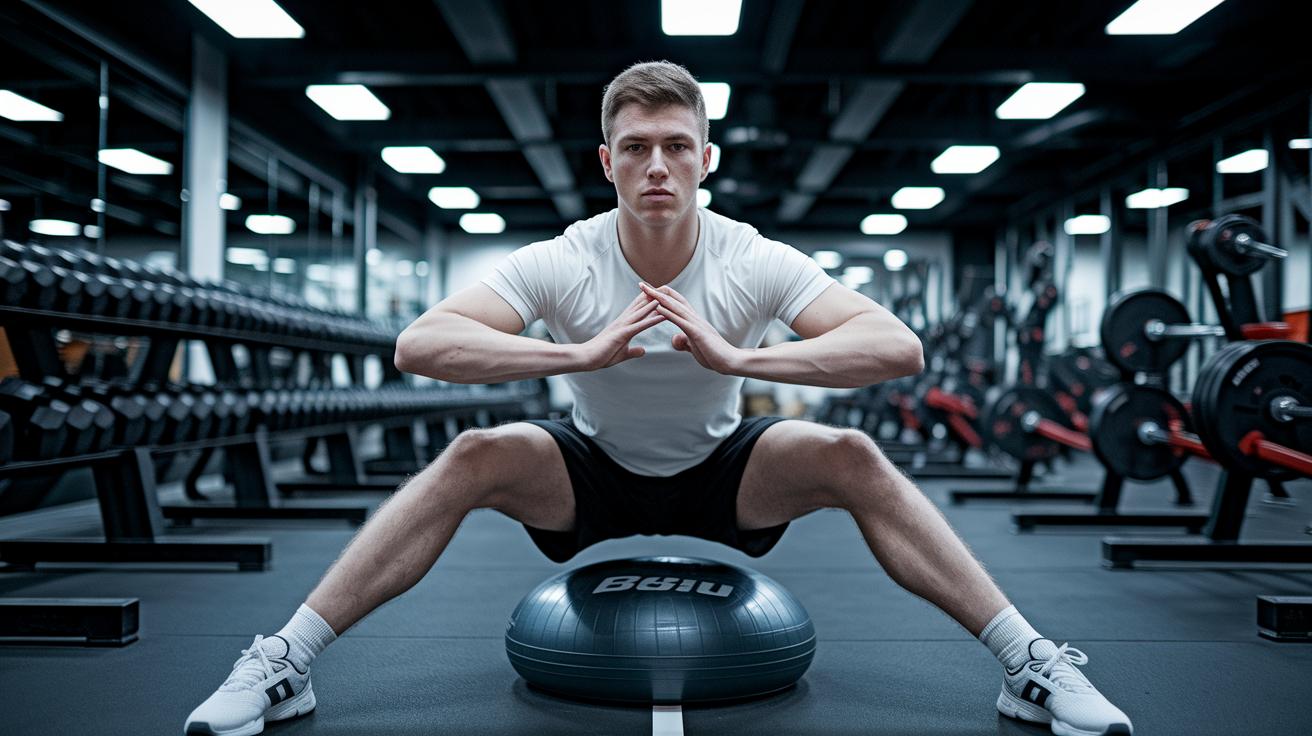
Using an unstable surface makes each leg work on its own, helping your muscles fire more smoothly and even out any imbalances. It also teaches your body to move in different directions, which boosts your coordination and steadiness.
Bosu Split Squat
Start by placing one foot on the dome side of the Bosu ball while keeping your other foot firmly on the ground. Slowly lower yourself into a squat for 12-15 reps. Keep your knee in line with your toe and your core tight. This move not only challenges your quadriceps and hip flexors, but it also makes your body adjust to a shifting surface, upping your stability.
Example: "Bosu Split Squat – Put your front foot on the unstable side, drop slowly into a squat, and feel each muscle work to keep you balanced."
Upper Body Challenge Drills & Plyometric Stability Training
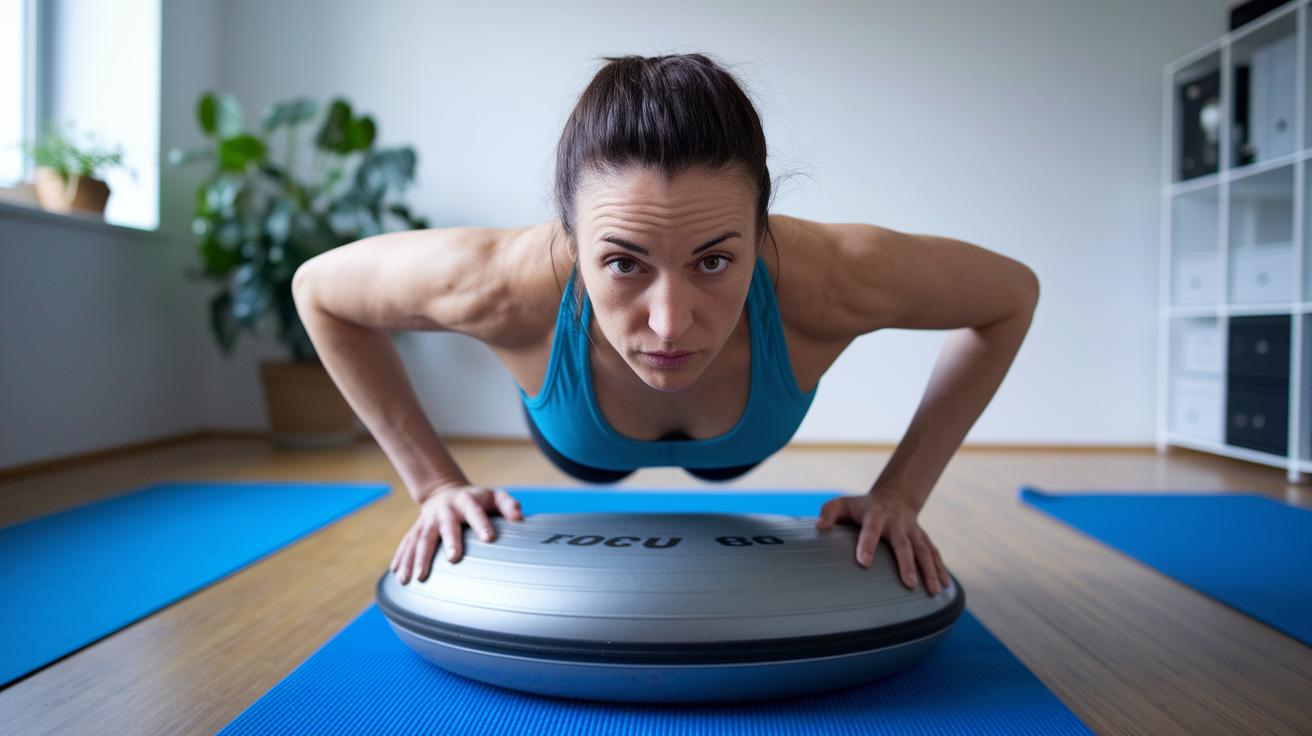
Bosu ball drills for your upper body mix strength work with balance challenges to help your muscles feel the burn in a new way. When you use a wobbly platform, your chest, shoulders, and core all pitch in, making everyday movements feel steadier.
Start with different push-up styles on the Bosu ball. Do 3 sets of 10 regular push-ups, then move on to 3 sets of 8 clapping push-ups, and finish with 3 sets of 10 split push-ups. These moves work your chest, shoulders, and core in a fun way. Next, try shoulder taps while holding a high plank on the stable side of the Bosu; aim for 3 sets of 12 taps on each side to boost your midline strength. Finally, give plyometric burpee jump-offs a go from the dome side. Do 3 sets of 8 explosive reps, taking a 30-second break between sets.
Always keep an eye on your form to protect your shoulders and wrists. Keep your wrists straight and move with care. If you need extra comfort, use a padded surface and adjust the exercise to match your fitness level. Take it slow, stay steady, and enjoy growing stronger each day.
Home-Based Bosu Ball Workouts for Cardio, Weight Loss & Endurance
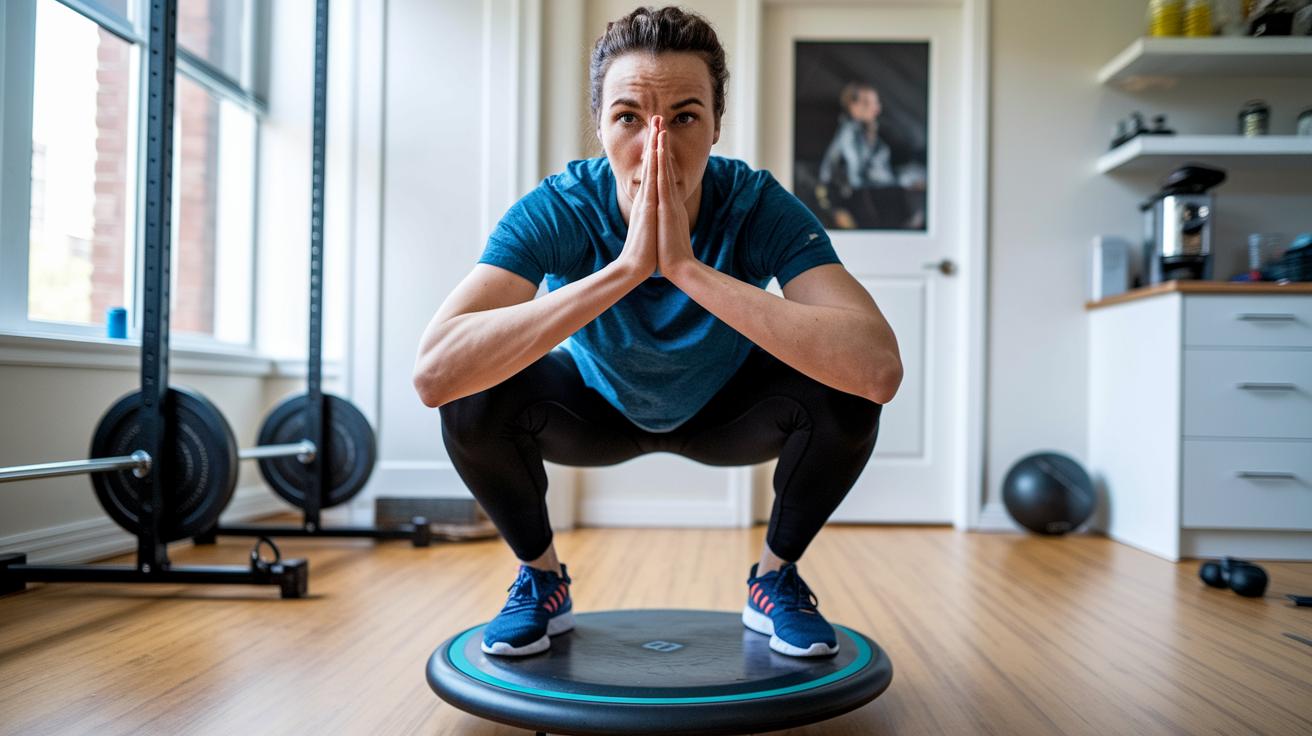
Imagine starting your workout at home with a Bosu ball that mixes quick bursts of movement with stability work. Start with something easy like 30 seconds of Bosu Squat Jumps. Picture a controlled jump that wakes up your leg muscles. Next, switch to 30 seconds of Mountain Climbers, feel your heart race as you move. Do these rounds about 4 to 6 times to build a fun, high-energy circuit that burns calories and keeps your balance on point. Keep your core tight, stand with your feet shoulder-width apart, and only rest just a little between sets.
Now, let’s design a sample workout that lasts 20 to 30 minutes while balancing work and recovery. Begin with a 5-minute off-Bosu warm-up to get your muscles ready. Then move into a 20-minute loop where you try a mix like Plank Jacks paired with Lunge & Press moves, which work your core without the need for crunches. Follow that with Step-Up and Side Hop drills that wake up your leg muscles and boost your heart rate. Alternate each exercise with a short rest period of 30 to 45 seconds so your heart rate gets a brief break before the next burst. This steady pace builds endurance and keeps your workout interesting. As you get better and more balanced, you can add more rounds or reduce resting time.
Injury Prevention, Rehabilitation Drills & Program Integration
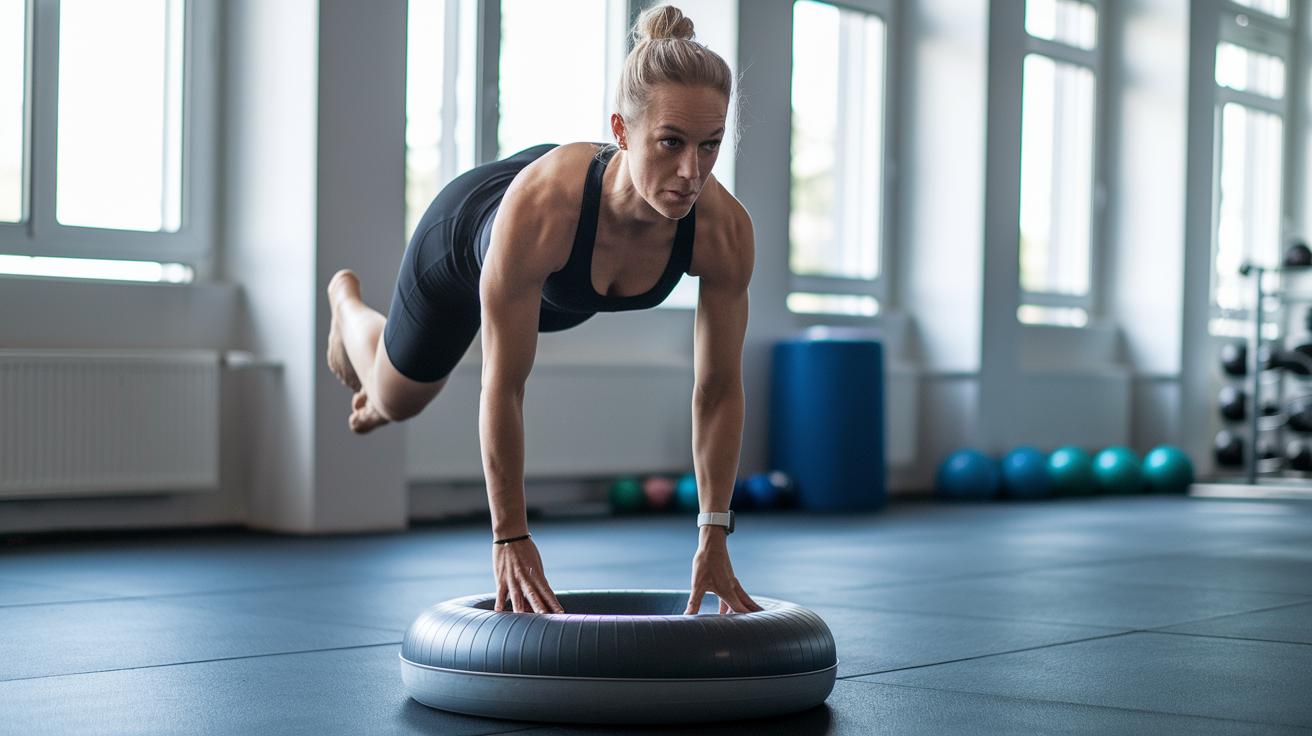
Four weeks of Bosu training can really help your balance and strengthen your ankles. Research shows that healthy adults can improve their ability to control their posture while moving, and studies found that using single-leg drop exercises on the Bosu boosts hamstring strength, which may lower the chance of an ACL injury. Seniors following a 12-week program with Bosu drills experienced better flexibility, balance, and lower back strength. Fun fact: In one small study, older adults showed big improvements after just three months of Bosu exercises.
Pick your drills based on what you need and your fitness level. If you're new to exercise or a senior, start with simple moves like gentle balance shifts or holding a light single-leg stance. For example, you might try 8 to 10 slow, controlled single-leg drops in a session. If you’re more active, you can challenge yourself with moves like side-to-side hops or careful, slow step-downs from the Bosu. Always focus on your form, keep your tummy tight, land softly, and increase your sets gradually. A good tip is to think of it like this: "Engage your lower body steadily and win every rep with focus."
Mix these drills into your regular workout routine by setting aside a day for balance and rehab work. Plan short circuits that combine stability exercises with moves that build strength. This way, your body gets used to different challenges while you steadily boost both your balance and strength. It’s a smart way to keep your workouts fun and help reduce the risk of injuries over time.
Final Words
In the action, we covered bosu ball exercise routines that boost balance, core strength, and full-body activation. We also unpacked beginner sequences, advanced balance circuits, core conditioning drills, lower body toning moves, upper-body challenges, cardio workouts, and injury-prevention techniques.
Each section broke down moves, modifications, and safety cues so anyone can work confidently on an unstable platform. Keep your body moving and enjoy each step toward better living.
FAQ
How can I access Bosu ball exercise routines in a PDF format?
The Bosu ball exercise routines PDF offer a downloadable guide with step-by-step instructions for balance, core, and total-body stabilization workouts along with detailed modifications.
What are Bosu ball exercise routines designed for seniors?
The Bosu ball exercise routines for seniors include gentle, balance-focused moves that enhance strength and mobility while featuring safety modifications for a supportive workout.
What do Bosu ball exercise routines with weights involve?
The Bosu ball exercise routines with weights combine balance training with resistance moves, guiding you through exercises that boost muscle strength and challenge your core stability.
What should beginners know about Bosu ball exercise routines?
The Bosu ball exercise routines for beginners introduce simple moves that build balance and strength with clear instructions and easy modifications, making the unstable platform approachable.
What are standing Bosu ball exercises?
Standing Bosu ball exercises involve performing moves in an upright position that focus on posture, leg strength, and balance by challenging your stability with controlled movement.
Are Bosu ball workouts effective?
Bosu ball workouts are effective as they engage core muscles, improve balance, and add an extra challenge to everyday exercises, leading to better coordination and overall strength.
What are the disadvantages of the BOSU ball?
The disadvantages of the BOSU ball include a limited range of motion for some moves and potential instability if techniques aren’t followed carefully, making it less suitable for some fitness levels.
How long should I stand on a Bosu ball?
The time to stand on a Bosu ball depends on your workout, but starting with 30 to 60 seconds per set is common, and you can increase the duration as your balance improves.
Are planks harder on a Bosu ball?
Planks on a Bosu ball are harder because the unstable surface forces your core and stabilizer muscles to work harder, enhancing the difficulty compared to a regular plank.
How do workouts with an exercise ball, medicine ball, kettlebell, dumbbell, resistance band, and treadmill compare to Bosu ball routines?
While Bosu ball routines emphasize balance and stability on an unstable base, workouts with exercise balls, medicine balls, kettlebells, dumbbells, resistance bands, and treadmills focus more on resistance, coordination, and cardiovascular improvements.