Have you ever wondered if even the smallest muscle twitch could change how you feel every day? It turns out that tiny movements really do count.
Doctors use a simple test that scores muscle strength on a scale from 0 to 5. This score helps them notice even minor shifts in how your muscles work and guides them in creating better exercise routines and therapy plans.
In this article, we're taking a closer look at this strength grading system. You'll see how clear measurements can make a big difference in boosting both your performance and your overall well-being.
Muscular Strength Grading: Elevate Your Performance

The 0-5 scale is a simple way for doctors to check muscle strength. Grade 0 means no muscle movement at all, while grade 5 shows full, normal strength. This method, called manual muscle testing (a hands-on check where a doctor asks you to move against pressure), gives clear and steady information about how well your muscles work. Funny enough, early clinicians found that even tiny gains in muscle contraction could really boost a patient's confidence.
Over time, manual muscle testing has developed into what we now call the MMT scoring system. At first, muscle strength was judged by looking at how muscles moved, but then doctors began using this step-by-step scoring system. I once came across a note that said moving from a simple look at muscle movement to a detailed scale made it easier to plan treatment and see real progress.
With this 0-5 scale, health professionals can track a patient's progress and tweak treatment plans as needed. The clear guidelines mean that no matter who does the test, everyone gets a reliable picture of muscle strength. For example, if someone improves from a grade of 2 to a grade of 4, it directly helps in tailoring exercise routines and rehabilitation plans.
Detailed Criteria for Each Strength Grade in Muscular Power Evaluation
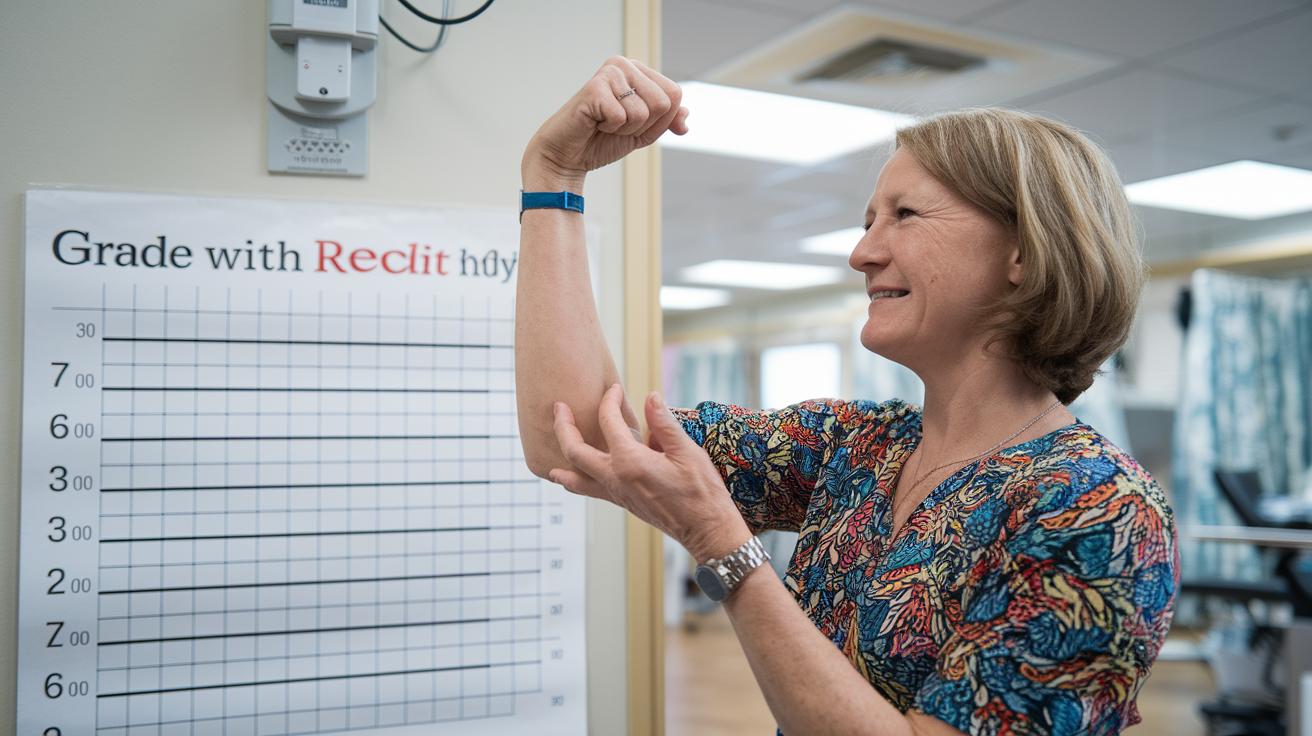
In physical therapy, knowing what each strength grade means is really important for checking how well muscles work. By setting clear levels from Grade 0 to Grade 5, therapists can easily explain how a muscle is contracting and resisting extra pressure. This simple scale guides treatment plans and helps notice even small changes in strength. Even a tiny jump from Grade 2 to Grade 3 shows that muscle control is getting better. It’s proof that every little bit of progress counts.
| Grade | Clinical Description |
|---|---|
| 0 | No muscle contraction is seen during testing. |
| 1 | A small muscle contraction happens; you might see a slight twitch without any movement. |
| 2 | The muscle contracts when the test is done in a position that takes gravity out of the way. |
| 3 | The muscle can move against gravity, but it can’t handle extra weight. |
| 4 | The muscle can work against some extra pressure, although it is not as strong as normal. |
| 5 | The muscle is fully strong, and it can work against strong resistance over its full range. |
Therapists use these grades to track progress over time. They compare test results from several visits to check for improvements and adjust exercises as needed. When a patient moves from Grade 2 to Grade 3, it reassures both the clinician and the patient that even small gains make a big difference.
Muscular Strength Grading Protocols and Testing Approaches in Clinical Force Appraisal

Manual Muscle Testing Procedure
In manual muscle testing, the patient is set up in a way that reduces extra forces like gravity, making it easier to see how the muscle really works. The examiner gently places their hands on the muscle group and applies light pressure for a few seconds, almost like a friend giving your strength a little challenge. They check to see how much force the muscle can make and watch for any tiny movements. By keeping the position simple and the pressure steady, it's easier to understand how well the muscle is doing.
Hand-Held Dynamometry Method
With hand-held dynamometry, a small device is used to measure the force produced during a muscle contraction. The device is placed on a firm surface, and a quick check of its settings ensures that the readings are right. Then, the patient either pushes or pulls against it while the device records the strongest effort. It’s similar to checking the pressure of a tire to make sure it meets the needed standard. This clear number helps clinicians see progress over time and decide if any changes are needed.
Isokinetic Dynamometry Testing
Isokinetic testing uses special machines that help the patient move smoothly at a steady speed throughout a full range of motion. As the patient moves, the machine measures how much force is generated at different joint angles. It automatically adjusts the resistance to create a natural and fluid test experience, kind of like how everyday activities work. By capturing quick changes in muscle force, this method provides useful information that can guide more effective exercise plans and treatments.
Ensuring Consistency: Inter-Rater Reliability and Calibration in Strength Quantification Metrics

Calibration Procedures for Hand-Held Dynamometers
Every time clinicians use a hand-held dynamometer, they want to know it is giving reliable force readings. To do that, they begin each session by checking a tiny force sensor called a load cell. This sensor tells them how strong the force is. They always compare the device’s numbers to a known standard. For example, a technician might press the device with a set amount of pressure and check if it shows the same value every time. This routine care keeps differences low and helps all testers use the same method when they measure muscle strength.
Training and Certification for Assessors
Making sure everyone understands the testing process is very important. All assessors take part in regular training so they know the proper way to handle the device and follow the testing steps. They also do simple tests to show they understand the protocol. Every so often, a recertification helps refresh their skills. With these checks in place, it doesn’t matter who takes the test – the results will be balanced and reliable. This method builds trust in the test results and supports clear, consistent health assessments.
Integrating Muscle Grading into Rehabilitation and Exercise Capability Review

Grade results help shape which exercises are chosen and how they grow in difficulty. When a patient has a lower grade, say Grade 2, therapists begin with gentle activities that build a little strength and control. As the grade goes up, the exercises get a bit tougher with more resistance and extra movement. For example, a patient might start with simple holds and later use resistance bands that work the muscle even more.
This step-by-step method helps stop setbacks and builds trust in the process. By keeping a close eye on the muscle grade, therapists can adjust the exercise level and timing. If a strength test moves from Grade 2 to Grade 3 after a few sessions, it means the patient is ready for a new challenge. These changes make sure the workout stays safe while still giving good results.
Real-life examples show that this plan works over time. One patient began with limited movement at Grade 2 and slowly moved up each grade with regular guided exercises. Watching these changes proves that a clear, planned approach can really boost muscle function and overall strength.
For athletes, muscle grades serve as clear markers of exercise ability. Coaches and trainers use these numbers to set goals, change training loads, and track progress over time. This easy-to-understand system helps create exercise plans that match the true readiness of the muscles.
Standardized Rating Tools and Guidelines for Accurate Muscular Function Appraisal

Major groups like the American Physical Therapy Association and the American Medical Association support using common grading scales for checking muscle strength. They point out that a simple, repeatable scale is key for accurate measurements. One guideline suggests, "Always use the 0-5 scale in the same way each time." This steady method helps doctors and therapists talk clearly about a patient’s progress no matter where they work.
Clinics now use many tools to record muscle strength. Some rely on traditional paper forms, while others use mobile apps or digital platforms. One clinician said, "I update my patient’s muscle scores on a tablet in real time, which makes data collection faster and more reliable." These methods help capture detailed assessments and make it easier to see changes over time. No matter if it’s a printed form or a mobile app, every tool plays a role in tracking improvements and guiding treatment choices.
Choosing the best tool depends on the setting. Outpatient centers often like mobile apps because they allow quick data entry and are easy to use. Inpatient facilities might prefer detailed paper forms that fit well with electronic records. Pediatric clinics, on the other hand, benefit from user-friendly tools that work well for kids. Picking the right method helps ensure that every clinical setting gets clear and consistent muscle strength assessments.
Final Words
In the action, we explored the 0–5 scale that clinches clear muscle evaluation and tracking. We discussed testing methods like manual techniques and device measures, and how careful calibration and training help keep tests spot on.
We also looked at ways to use these results to plan workouts and guide recovery. The focus on muscular strength grading brings clarity to both clinicians and fitness enthusiasts, leaving us with a positive road ahead for healthier living.
FAQ
Q: What are the grades in manual muscle testing, and what do they mean?
A: The manual muscle testing system typically scores strength on a scale of 0 to 5. A grade 0 shows no contraction, and a grade 5 represents normal strength, offering a clear way to track muscle function.
Q: What does 4+/5 strength mean?
A: The 4+/5 rating means that the muscle performs just above a grade 4, yet it isn’t fully at normal strength, which is indicated by grade 5. This shows a small improvement that may need further strengthening work.
Q: What does 2+ MMT mean?
A: The term 2+ MMT means the muscle displays slightly better performance than a basic grade 2, showing some active movement beyond a minimal contraction but still indicating weakness.
Q: What does +3 muscle strength imply?
A: A +3 muscle strength rating means the muscle can move against gravity, but its resistance is lower than normal. This suggests that while there is measurable activity, the overall strength is still limited.
Q: How is muscle strength testing performed in physiotherapy?
A: Muscle strength testing in physiotherapy uses techniques like manual muscle testing and sometimes handheld devices. These methods provide a standardized way to assess strength and help plan effective treatment.
Q: What is muscle tone grading?
A: Muscle tone grading evaluates the tension in a muscle both at rest and during contraction. This assessment helps professionals understand how responsive a muscle is and supports decisions in setting up rehabilitation exercises.
Q: Where can I find the Oxford muscle grading Scale PDF?
A: The Oxford muscle grading scale PDF is available on trusted medical resource websites and academic libraries, offering detailed guidelines for assessing muscle strength consistently.
Q: What is Modified MRC muscle grading?
A: Modified MRC muscle grading is an updated version of the original Medical Research Council scale. It clarifies scoring based on refined criteria, allowing clinicians to record subtle changes in muscle strength more accurately.