Ever wonder why some people seem to have endless energy? It might be because they plan their meals well by paying attention to proteins (the parts in food that help build and repair your body), carbohydrates (the sugars and starches that give you fuel), and fats (the helpers that store energy).
When you balance these three, your body gets what it needs to feel its best. In this guide, I’ll show you how to count your macros step-by-step so you can enjoy steady energy and a brighter mood each day.
Get ready to discover a new way of living healthy through smart meal planning.
Fundamentals of Meal Planning with Macros
Macros are the three big nutrients your body relies on: proteins, carbohydrates, and fats. Proteins help build and repair your body, carbohydrates give you quick energy, and fats support your cells. Proteins and carbohydrates provide about 4 calories per gram, while fats offer roughly 9 calories per gram.
When you get your macros in balance, you might feel more energetic and even notice a boost in your mood. Imagine feeling a steady flow of energy throughout the day and lighter overall, it's like giving your body exactly what it needs.
Macro planning is a bit different from regular meal planning. Instead of just counting calories or focusing on food groups, you choose foods based on their nutrient makeup. This simple approach makes it easier to track what you eat and helps you fine-tune your meals to meet your daily fitness and wellness goals.
Calculating Your Macro Needs for Meal Planning with Macros
First, figure out how many calories your body uses each day. This number, called TDEE (total daily energy expenditure), is just an estimate of the energy you burn while you’re moving, working, or even just relaxing. For instance, if you're moderately active, you might multiply your weight by a certain number to get your TDEE. Using this number helps you decide if you want a little fewer calories for fat loss or a bit more if you're building lean muscle.
Now, pick the mix of proteins, carbohydrates, and fats that fits your goals. Many people start with ratios like 40/30/30 or 30/40/30, which share the calories among these three key nutrients. If you’re trying to shed a few pounds, you might bump up the protein and ease back on the carbs and fats to help create a small calorie deficit. But if you’re aiming to build muscle, a little extra carbohydrate can power your workouts and help your muscles recover. Think of it as creating a meal plan that meets both your energy needs and fitness goals.
If you’re just starting, using a macro calculator and a simple food tracking app can be really helpful. These tools let you enter details like your weight, age, and activity level to suggest personalized macro goals. Write down what you eat in an app and, over time, you can fine-tune your meals. It’s all about learning what works best for your body as you go along.
Building Your Weekly Macro-Based Meal Plan
Planning your meals for the week can be a fun adventure. A good balance of proteins, healthy fats, and carbohydrates gives you energy while keeping your meals interesting. Each dish acts like a small building block for steady energy and overall well-being.
Try breaking down your meal prep into simple steps. Mix and match different ingredients and sauces so every meal stays fresh and tasty. Think of it as assembling a puzzle, each piece making your daily plan complete.
Here are some ideas to get you started:
- Greek yogurt parfait with berries and granola (breakfast)
- Apple slices with almond butter (snack)
- Grilled chicken salad with quinoa and cherry tomatoes (lunch)
- Baked salmon with steamed broccoli and brown rice (dinner)
- Grilled shrimp with couscous and roasted vegetables (dinner)
- Spaghetti squash with turkey meatballs and marinara (dinner)
Swapping ingredients is a fun way to keep your plan exciting. For instance, you might choose cottage cheese instead of Greek yogurt to change up the flavor, or alternate between quinoa and brown rice to try different textures. Stick to your schedule as much as you can, but allow some room for small tweaks based on what’s fresh or available in your pantry.
Over time, finding the right balance will feel natural. Soon enough, you'll adapt your plan to suit your evolving tastes and meet your nutritional goals with ease.
Meal planning with macros Inspires Healthy Living
Apps such as MyFitnessPal and Cronometer make tracking your meals simple. You can quickly log what you eat and even plan future meals with just a few taps. For example, after logging your breakfast, you can see the protein you’ve already had. It’s a friendly way to help you stick to your macro plan all day long.
Free templates and downloadable macro spreadsheets also come in handy. Instead of starting from scratch, you fill in your daily food choices on a ready-to-use format. This method gives you a clear view of your nutrient intake and takes away the hassle of doing all the math by hand.
Today, smart tools like AI-driven meal generators and digital diet customization systems add a modern twist to meal planning. They adjust your meal options based on your needed macros and your favorite foods. Imagine a system that suggests recipes and changes portion sizes in real-time, making it easier to keep your eating plan on track with your health goals.
Meal Prep Techniques to Simplify Macro-Focused Planning
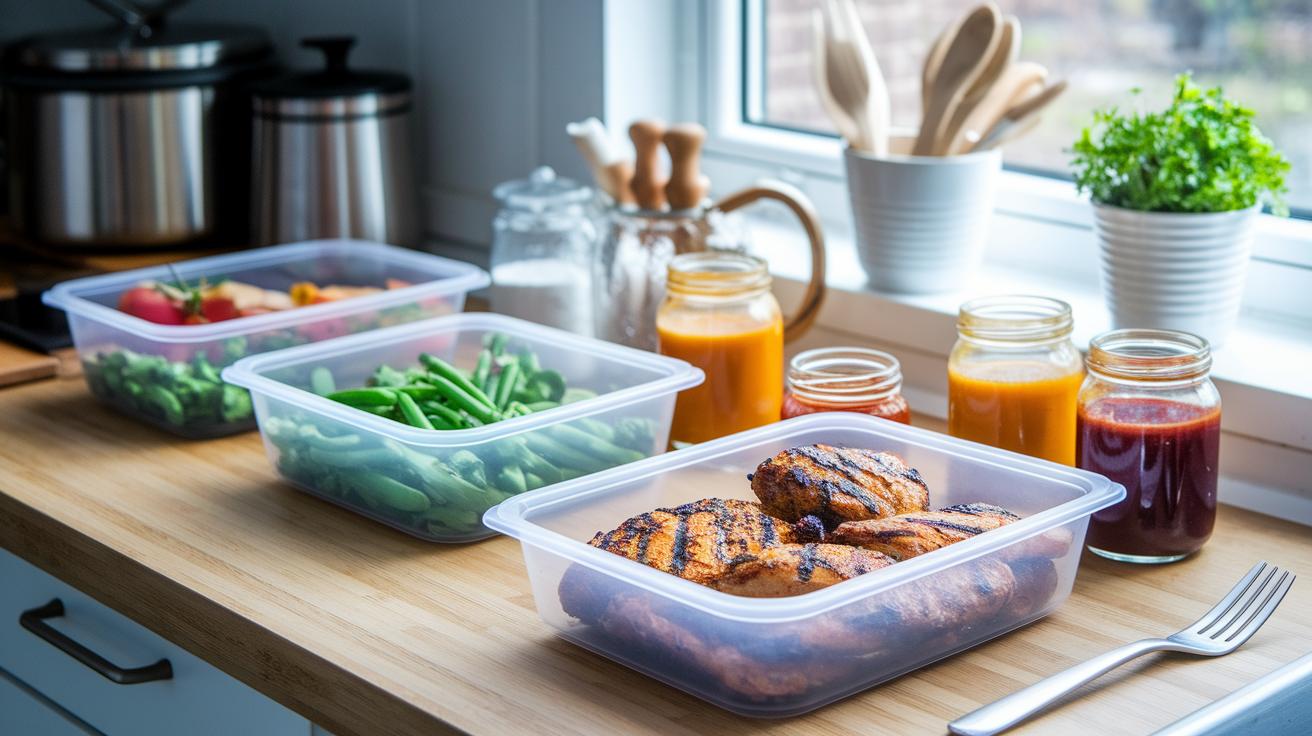
Getting your proteins and sauces ready ahead of time can really make your week feel less hectic. When you cook in advance, you avoid the daily scramble of deciding what's for dinner and can relax instead. Pick proteins that work well in many meals, like chicken, flank steak, or ground beef, and add a couple of favorite sauces. Fun fact: one chef spent just two hours on Sunday prepping his proteins and sauces, which made his entire week so much easier.
Try to set aside a few hours twice a week for your prep session. Start by trimming and seasoning your proteins before cooking them the way you like, grilling or baking works great. Then, mix up two sauces that go well with a variety of dishes, like a tangy marinade or a warm, savory sauce. As you work, keep each small batch separate so each one stays fresh for when you need it. For example, slice and store your grilled chicken so it's ready to toss into salads or wraps later.
Store all your proteins and sauces in clear, airtight containers, and label each container with the type or meal it goes with. Make sure everything cools to room temperature before popping it into the fridge to keep it safe and tasty. When you're ready for a meal, heat your food in the microwave or on the stove, and combine different proteins, sauces, and fresh sides to create varied and flavorful dishes that match your macro goals.
Tailoring Meal Planning with Macros to Your Fitness Goals
When you set up a macro meal plan (macros are the main nutrients in your food, proteins, carbohydrates, and fats that give your body energy) for your fitness goals, adjusting the balance of these nutrients really makes a difference. If your goal is to lose fat, you might focus on eating extra protein to help protect your muscles while you cut calories. But if you're hoping to build muscle, adding more carbohydrates can fuel your workouts and speed up recovery. Even if you're just keeping your weight steady, fine-tuning your macros can help keep your energy levels steady and boost your overall well-being.
Your body’s needs can change depending on how active you feel and the intensity of your workouts. So, it makes sense to try out different ratios and pay attention to how your body reacts. A food tracking app can be a handy tool to see how small changes in your intake of protein, carbs, and fats can affect your energy and recovery. With a bit of experimenting and honest feedback from your body, you'll soon find the perfect balance that matches your lifestyle and fitness goals.
| Goal | Protein % | Carbohydrates % | Fat % |
|---|---|---|---|
| Weight Loss | 30% | 40% | 30% |
| Muscle Gain | 25% | 50% | 25% |
| Maintenance | 30% | 50% | 20% |
Try these ratios and see how you feel. Some days you might need a little tweak depending on how hard you worked out or how energetic you feel. Over time, with a dash of patience and a bit of trial and error, you'll nail down the perfect macros for a plan that truly supports your fitness journey.
Advanced Tips for Sustaining Meal Planning with Macros
Start by noticing how your body feels after each meal. Try using an app to keep track of your food and activity. It could help you see when you feel more energized or satisfied after eating a well-balanced meal. Adjust your protein, carbohydrates, and fats based on these cues to make your plan work better for you.
Keep things simple by rotating a few staple meals and ingredients. Think of it like mixing up your favorite playlist with new seasonal produce. This way, your meals stay fresh and exciting without extra fuss.
If your progress seems off or you're not hitting your goals, consider chatting with a nutrition expert. A dietitian or coach can offer advice tailored to you, like tweaking portion sizes or timing meals around your daily routine. Their insights might be just what you need to keep moving in the right direction.
Final Words
In the action, we broke down macro basics, calculated daily calorie needs, and set up weekly menus while explaining simple meal prep techniques. We pointed out how to use handy tools and adapt your meal schedule for various goals, touching on mindful nutrient choices along the way.
Keep experimenting with meal planning with macros to find what makes you feel great. Stay positive and embrace small adjustments that add up to better energy, mood, and overall wellness.
FAQ
How is meal planning with macros discussed on Reddit?
The discussions on Reddit about meal planning with macros share community tips, template ideas, and personal experiences to balance proteins, carbs, and fats for various health goals.
What free macro meal plan and planner resources are available?
The free macro meal plan and planner resources, like Excel templates and app-based generators, provide structured meal ideas that align with balanced macronutrient goals for weight loss and overall wellness.
What does the 40-40-20 rule for macros indicate?
The 40-40-20 rule for macros indicates a balance where 40% of calories come from carbohydrates, 40% from protein, and 20% from fats, supporting steady energy and efficient nutrient distribution.
How do I calculate my macros for a meal?
The method to calculate macros for a meal involves dividing your total calorie goal among protein, carbs, and fats according to your chosen ratios, which helps maintain a balanced nutrient intake.
How do I meal prep when counting macros?
The method for meal prepping while counting macros suggests batch cooking proteins and veggies, portioning meals based on your macro targets, and storing them to simplify healthy eating throughout the week.
What is the 50-20-30 macros meal plan?
The 50-20-30 macros meal plan assigns 50% of calories to carbohydrates, 20% to protein, and 30% to fats, offering a unique balance designed to support energy levels and satiation.
What is the best macro meal planner app?
The best macro meal planner app generally provides user-friendly tracking, customizable meal templates, and integrated calorie databases, making it easier to log and meet your daily macronutrient targets.