Have you ever wondered if simple chest exercises might be slowing you down? Compound movements work several muscles at once, sparking muscle growth and boosting strength with each rep. This guide explains how bench presses, incline presses, and weighted dips can completely change your routine.
When you train smart, every move counts. You give your chest the full workout it needs. Ready to try these classic lifts to build strong, defined chest muscles?
Top Chest Compound Exercises for Strength and Definition
Compound chest exercises work many muscles at once. This means more muscle fibers get activated compared to exercises that focus on just one area. For example, try the barbell bench press in four sets with 6, 8, 10, and 12 reps. It really targets your middle chest while also boosting overall strength. It's a great way to build muscle and power.
Incline bench presses at a 30° angle help focus on the upper part of your chest. It’s like giving those upper chest muscles a little wake-up call. With this added angle, you're set to create a well-balanced look. Imagine pressing up the weight and feeling strength build with each smooth movement.
You can also add weighted dips to hit the lower chest. When doing dips, lean forward just a bit to guide the effort to the lower area. Pairing this with a high-to-low cable crossover drop-set can really maximize your workout. This combination not only adds size but also makes your chest workout full and well-rounded.
For the best results, aim for one or two chest workouts each week so your muscles have time to recover. These compound exercises build the foundation for strong and defined muscles, something that isolation exercises just can’t match. Give them a try and see the difference in your training.
chest compound exercises: Build Bold Strength

Get your bench and equipment set up so your form is on point and you feel stable. This guide dives into four main lifts that work different parts of your chest. You'll find tips on how to arrange your bench, where to place your grip, and even some variations using your own body weight.
The barbell bench press is a classic move. Lie down on a firm bench and squeeze your shoulder blades together. Grab the bar a bit wider than your shoulders. Lower the bar slowly to your middle chest and then push it back up with controlled force. Make sure your feet are firmly on the ground and keep a gentle curve in your back to ease shoulder strain. Try a light warm-up before starting your sets to nail your setup.
For the incline dumbbell press, focus on hitting your upper chest. Set your bench at a 15 to 30-degree angle. Keep a natural bend in your arms as you push the dumbbells upward, lowering them until they nearly touch your collarbone. Move in a smooth, steady flow to really engage those muscles.
Weighted dips work your lower chest when you lean forward just a bit. Lean using a slight forward tilt, lower yourself until your upper arms are parallel to the floor, and then push back up steadily. Tuck in your core to keep everything balanced. Remember to feel your chest working during both the drop and the push.
Push-up variations add a bodyweight element that spices up your routine without dropping form. Choose from standard, weighted, band-assisted, or even explosive plyometric push-ups to keep your muscles on their toes.
For a workout plan, try this:
- Barbell Bench Press: 4 sets, 6–12 reps, with an optional drop-set cable crossover finish.
- Incline Dumbbell Press: 4 sets, 6–12 reps, using a smooth, controlled arc.
- Weighted Dips: 4 sets, 6–12 reps, focusing on a slight forward lean and steady movement.
- Push-up Variations: 4 sets, 6–12 reps, with an optional drop-set for extra challenge.
Targeting Upper, Mid, and Lower Chest with Compound Variations
If you're working on your chest, try mixing things up with some subtle changes. For your upper chest, instead of the usual incline press, tilt the bench a bit to around 20° and slow down the lowering part for three seconds before pushing up quickly. This little trick helps you really feel the burn in your upper chest.
For your mid chest, give a brief pause at the bottom of your flat press, just one or two seconds. This extra hold builds muscle tension and control. You can also mix it up by switching to a reverse-grip press, which tackles the muscles from a slightly different angle.
When targeting your lower chest, try alternatives like a reverse-grip decline push-up or a dip with a controlled tempo. For example, lower yourself slowly for three seconds during a dip, then explode upward. This change adds a new challenge that differs from the standard decline press or weighted dip.
| Chest Area | Variation |
|---|---|
| Upper | Incline press at 20° with a slow three-second lowering phase |
| Mid | Flat press with a one-to-two second pause, or a reverse-grip press |
| Lower | Reverse-grip decline push-up or a dip with slow lowering and quick push upward |
Proper Form, Safety Tips, and Common Mistakes in Chest Pressing
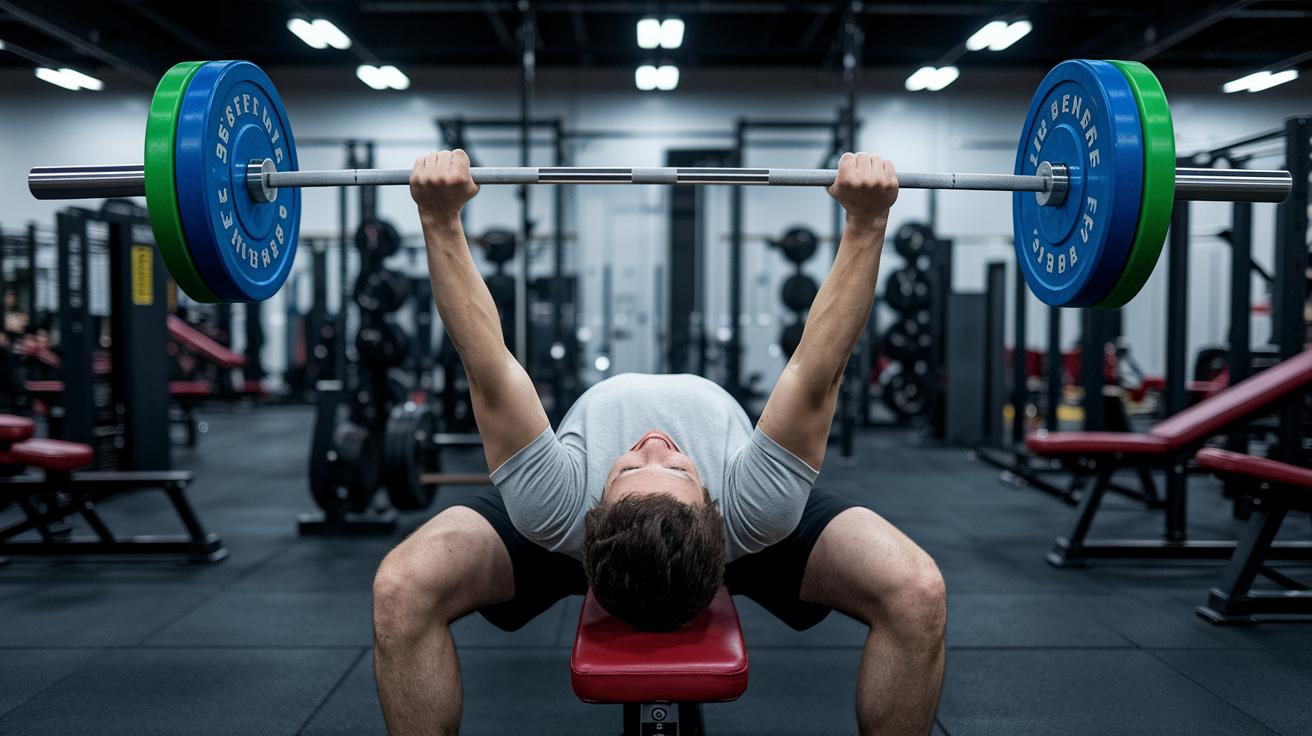
Proper form in chest pressing means moving in a controlled way while keeping injuries at bay. Start your workout with a good warm-up. Try doing band pull-aparts, gentle shoulder rotations, and two light sets of 15 push-ups. This gets your muscles awake and ready for heavier lifts.
When doing chest compound lifts, keep a few simple cues in mind. Pull your shoulder blades back, keep your wrists straight (in a neutral position), and let your elbows form about a 45-degree angle with your torso. By bracing your abs, you help protect your lower back from unwanted arching.
- Avoid letting your elbows flare out.
- Don’t bounce the bar off your chest.
- Make sure the weight is even on both sides.
Stick to one or two chest sessions per week and give yourself 48 to 72 hours of rest, so your muscles can recover and grow stronger. Keeping every move deliberate makes your chest press both safe and effective. Set up well, listen to your body, and build your strength with care.
Integrating Chest Compound Exercises into Your Workout Split
Mixing chest exercises into your workout can be simple when you choose a plan that works for you. Whether you're into push/pull/legs, upper/lower splits, or full-body routines, these moves slide in smoothly. Imagine starting your week with a focused bench press day that really works your chest. Then, a few days later, you add a push circuit with dips, incline press, and push-ups. This way, not only does your chest get a strong workout, but your triceps and shoulders also lend a hand.
Try increasing the challenge gradually. Each week, add about 5% more weight or just one extra rep. This slow ramp-up helps your muscles grow steadily while keeping you safe. One neat trick is to plan your workouts in phases. For four weeks, work in a hypertrophy mode with 3 sets of 10 reps. Next, shift to a strength phase with 5 sets of 5 reps. Then, give yourself a week to ease off so your body can recover well.
- Pick a routine that fits your life, push/pull/legs, upper/lower, or full-body.
- Dedicate one day to a strong bench press focus and another day to a push circuit.
- Slowly add more weight or an extra rep every week.
- Alternate between four weeks of muscle-building workouts and strength-focused phases.
Keep your chest days to one or two times a week and make sure you let your muscles rest. It really pays off in the long run.
Advanced and Explosive Chest Compound Techniques

Are you ready to push your chest workout further? These advanced moves can boost your strength while keeping your muscles working hard for true growth. One neat trick is to mix a tough bench press set with a quick drop to horizontal cable crossovers. Start strong on the bench, then lighten the weight and dive into the cable exercise to fully work your chest.
For a burst of energy, try plyometric push-ups like medicine-ball push-ups or clapping push-ups. These explosive moves help target the fast-twitch fibers (the muscle parts that react quickly) that are key for powerful lifts.
You can also rev up your routine with Speed Bench sessions. For example, do 5 sets of 3 reps at about 60% of your one-rep max, focusing on moving as quickly as you can. Cluster sets work too, try doing 4 sets of (3+3) reps with a 15-second break between each mini-set to keep your muscles engaged with short, intense efforts.
Lastly, pair an incline press with a decline press in a superset. Switching between angles helps strengthen your chest through its full range of motion. These techniques are great for those who are ready to break through typical limits and build a more dynamic, explosive chest.
Sample Compound Chest Workout Table
This chest workout is built around compound moves that work all parts of your chest. It kicks off with an incline barbell press, which targets the upper chest and helps keep your shoulders steady. You do 4 sets of 8 reps with a 60-second rest in between so you can build strength while keeping good form.
Then, you move to the flat dumbbell press, which hits the middle of your chest. Doing 3 sets of 10 reps with the same 60-second break helps you steadily boost your muscle endurance.
After that, weighted dips take care of your lower chest. With 3 sets of 8 reps and a little extra rest of 90 seconds, you make sure all parts of your chest get a fair workout.
Next up are plyo push-ups, a bodyweight move that adds a burst of speed and power. In 3 sets of 6 reps with a 60-second pause, this exercise gives your chest a fun, explosive kick.
Stick with this routine day after day to gradually build strength, fine-tune your techniques, and get the most out of every session.
| Exercise | Sets | Reps | Rest |
|---|---|---|---|
| Incline Barbell Press | 4 | 8 | 60s |
| Flat Dumbbell Press | 3 | 10 | 60s |
| Weighted Dips | 3 | 8 | 90s |
| Plyo Push-ups | 3 | 6 | 60s |
Final Words
In the action, we broke down key chest compound exercises that combine effective form cues, varied workout splits, and advanced techniques. Each section delivered practical tips to boost strength, target different chest areas, and promote safe practice. We shared detailed guides, easy-to-follow tables, and warm advice to help you feel confident while you work up a sweat. Keep experimenting with these chest compound exercises and embrace every challenge with a smile. Enjoy the positive change in your routine and let your strength shine!
FAQ
What are chest isolation exercises and can you do them at home?
The chest isolation exercises focus on one muscle group, letting you shape your chest with targeted movements. At home, variations like single-arm push-ups offer a simple way to work your pecs.
What are back compound exercises?
The back compound exercises engage several muscles such as the lats and traps. They incorporate moves like pull-ups and rows that build strength and improve posture across large muscle groups.
How do shoulder compound exercises help your training?
The shoulder compound exercises work multiple parts of the shoulder along with supporting muscles. They boost strength and stability through moves like overhead presses that support overall upper-body performance.
What are upper chest compound exercises?
Upper chest compound exercises, like the incline bench press, target the upper pecs. They work several muscle groups simultaneously, promoting balanced strength and a well-defined chest.
What is the best compound chest exercise?
The best compound chest exercise is often the barbell bench press. It engages a wide range of chest muscles and boosts overall strength and muscle growth through multiple fiber activation.
How do you hit all three parts of the chest?
Hitting all three parts of the chest means choosing exercises for the upper, mid, and lower regions. Incline presses target the upper chest, flat presses work the center, and dips or decline presses hit the lower area.
Is three exercises enough for a chest day?
Three well-chosen exercises can be enough for a chest day if each move targets different angles. This approach allows for efficient activation of all parts of the chest, promoting balanced development.
What are the golden five compound chest exercises?
The golden five compound chest exercises typically include the barbell bench press, incline dumbbell press, weighted dips, decline press, and push-up variations. They cover a wide range of movements for full chest activation.