Do you ever wish you could give your back a little boost without leaving home? Try grabbing a pair of dumbbells to build strength and improve your posture. Start with a gentle warm-up to get your spine moving, then add a few simple moves to fire up your back and add stability. In this post, you'll find easy exercises that bring energy and support to your day. Ready to discover how a few dumbbell moves at home can really change your strength?
Warm Up and Spinal Activation for Home Dumbbell Back Workouts
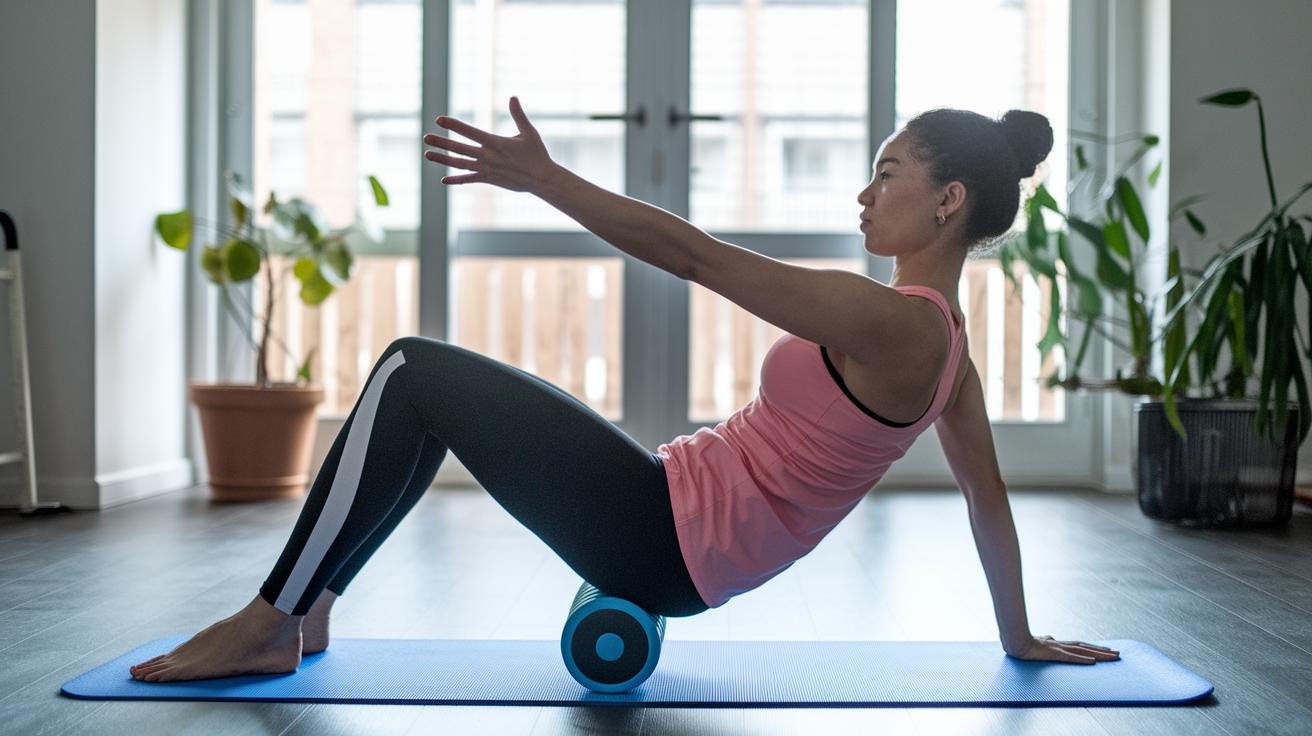
Getting your body ready is key before you start your home dumbbell back workout. A gentle warm-up helps your muscles, ligaments, and joints work safely. You can imagine it like slowly waking your body up for action. A few foam rolling drills and light motions like arm circles, torso twists, and even bodyweight squats help ease the stiffness in your back and prepare you for lifting.
Next, it’s important to wake up your upper spine. Simple moves like scapular push-ups and band pull-aparts not only set you up for better posture but also boost your back’s stability. When you do these exercises, you get more blood flowing to your muscles, making them more mobile and less likely to get strained during your workout.
Here are some tips to get you started:
- Foam Rolling Drill: Gently roll along your upper back for about 30 seconds, paying extra attention to any tight spots.
- Arm Circles: Do 20 small to medium circles in both directions to help warm up your shoulder joints.
- Torso Twists: Stand up straight and twist side-to-side slowly to engage your core and back.
- Scapular Push-Ups: While in a plank, try to squeeze your shoulder blades together with each push-up.
- Band Pull-Aparts: Hold a resistance band with both arms straight out, then pull it apart slowly until you feel your mid and upper back working.
Imagine feeling more prepared and strong with every step. It’s a simple routine that makes your workout safer and more effective, just like chatting with a friend who cares about your well-being.
Key Dumbbell Row Variations for At-Home Back Strength

Building a strong back starts with simple, focused moves that work the right muscles. You don't need a bench to get moving. Using dumbbells with moves that work both sides together and one side at a time helps you build a balanced, powerful back. Each exercise is designed with good form and steady progress in mind, so you work hard while staying safe.
-
Bent-Over Dumbbell Row
Start by bending at your hips with a flat back. As you pull, drive your elbows straight back and feel that gentle squeeze between your shoulder blades. Keep your core tight to help your body stay steady. -
Single-Arm Dumbbell Row
Hold your tummy tight and use your free hand to keep your body stable. Move the dumbbell in a slow, controlled way. Keep your back straight and focus on fully working the muscles on each side. -
Renegade Row
Get into a strong plank position. Lift each dumbbell one at a time, letting your elbow move upward with care. Try to keep your hips steady and feel how your whole body, from your shoulders down to your legs, joins in the work. -
Seal Row
Lie face down on a bench or a stability ball for a focused mid-back workout. Pull the dumbbell slowly toward your body, keeping the motion smooth. At the top, squeeze your shoulder blades together like you're giving them a gentle hug. -
RDL Row
Start by bending at the hips like you’re doing a deadlift, keeping your back in a natural position. Then bring the dumbbell up as if you’re doing a row. This move works your glutes, hamstrings, and back muscles all at once. -
Dumbbell Row to Hip
Gently hinge at your hips to help target the lower back and side muscles. Slowly drive your elbow toward your hip with control. Focus on keeping your balance and symmetry as you complete each rep.
Pullover and Isolation Moves for Dumbbell Lat Sculpting

Working on isolation moves like the lat pull over and reverse fly can really help you control your back muscles while making your midsection stand out. The lat pull over stretches your lats and also works your chest and shoulders. It helps you see clear differences between muscle groups. When you take your time and use proper form, you feel every muscle contract and work hard. This makes each rep meaningful and challenges your stabilizing muscles.
The reverse fly zeroes in on the mid-back, giving extra attention to your rear shoulder muscles, the small muscles between your shoulder blades, and your upper back. By bending at your hips and slowly opening your arms, you build muscle tension and improve symmetry. This move is especially useful if your upper back feels tight. Done with focus, these exercises can help you better feel each muscle working, which may lead to better posture and more strength.
-
Lat Pull Over
- Lie down with a slight bend in your elbows and hold a dumbbell with both hands.
- Slowly lower the dumbbell behind your head until you feel your chest open up.
- Lift the dumbbell overhead by squeezing your lats.
- Return the dumbbell to the starting position in a slow, controlled way.
- Mind-muscle tip: Focus on the stretch in your lats with every repetition.
-
Reverse Fly
- Stand by bending at the hips with a little bend in your knees and keep your back flat.
- Hold a dumbbell in each hand and let your arms hang straight down.
- Slowly open your arms out to the sides until they are parallel with the floor.
- Bring your arms back to the start, keeping your movements steady.
- Mind-muscle tip: Really squeeze your shoulder blades together at the peak of the move.
Targeted Lower and Mid-Back Exercises with Dumbbells
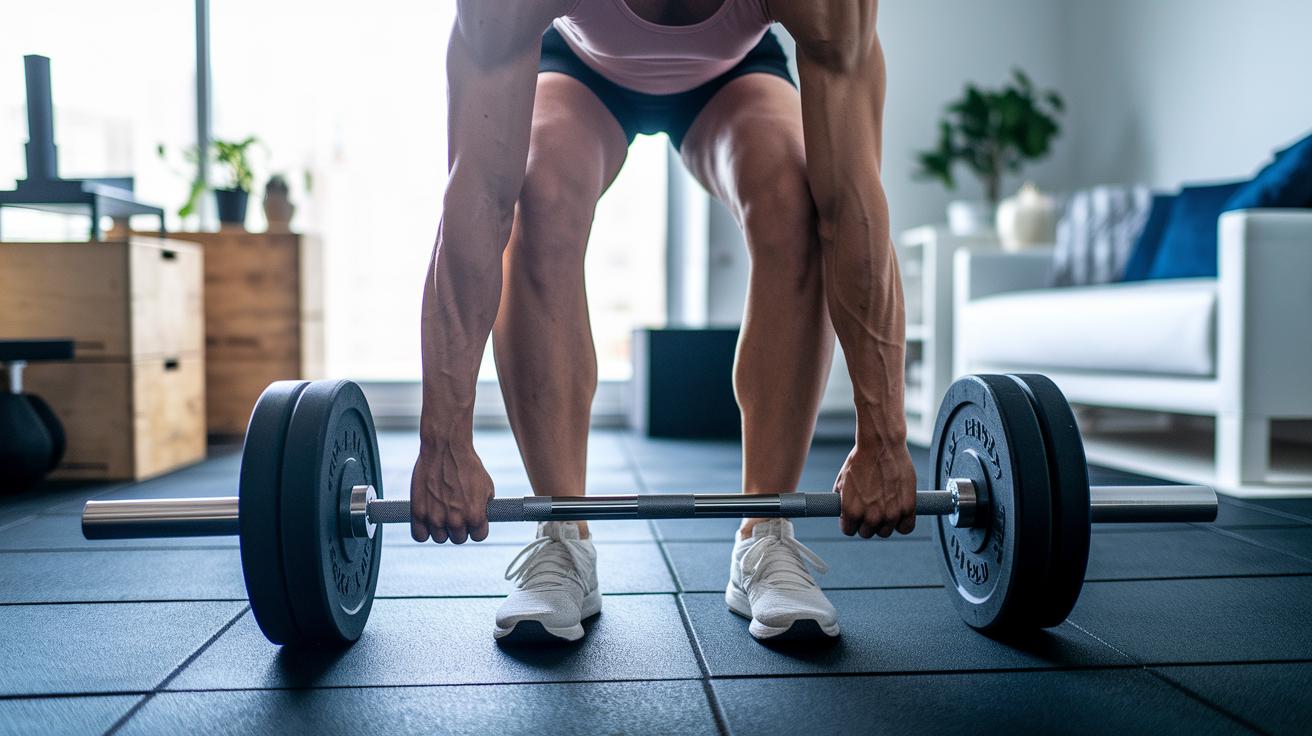
Working on your mid and lower back can help you stand taller and move more easily each day. These simple dumbbell moves add variety to your routine and work well alongside your upper-body workouts. Try out exercises like the Romanian Deadlift and Bird Dog Row to build a solid foundation while you connect more deeply with your body. When you focus on the right form, you can lower your risk of injury and keep your back strong.
-
Romanian Deadlift
- Target: Works your glutes, hamstrings, and lower back
- Tips: Keep your hips hinge-like, hold your back flat, and tighten your core
-
Good Morning
- Target: Boosts mid-back stability and gives a gentle wake-up to your lower body
- Tips: Hold the dumbbell close across your chest, keep your spine in a natural line, and bend slowly from the hips
-
Bird Dog Row
- Target: Strengthens and steadies your mid-back
- Tips: Start on all fours, brace your tummy muscles, and pull the dumbbell with a slow, steady motion
-
Superman
- Target: Engages your back muscles and builds overall tone
- Tips: Lie on your stomach, lift your chest a little by raising both your arms and legs together, and be sure not to overextend your neck
Progression, Training Variables, and Nutrition for Dumbbell Back Workouts
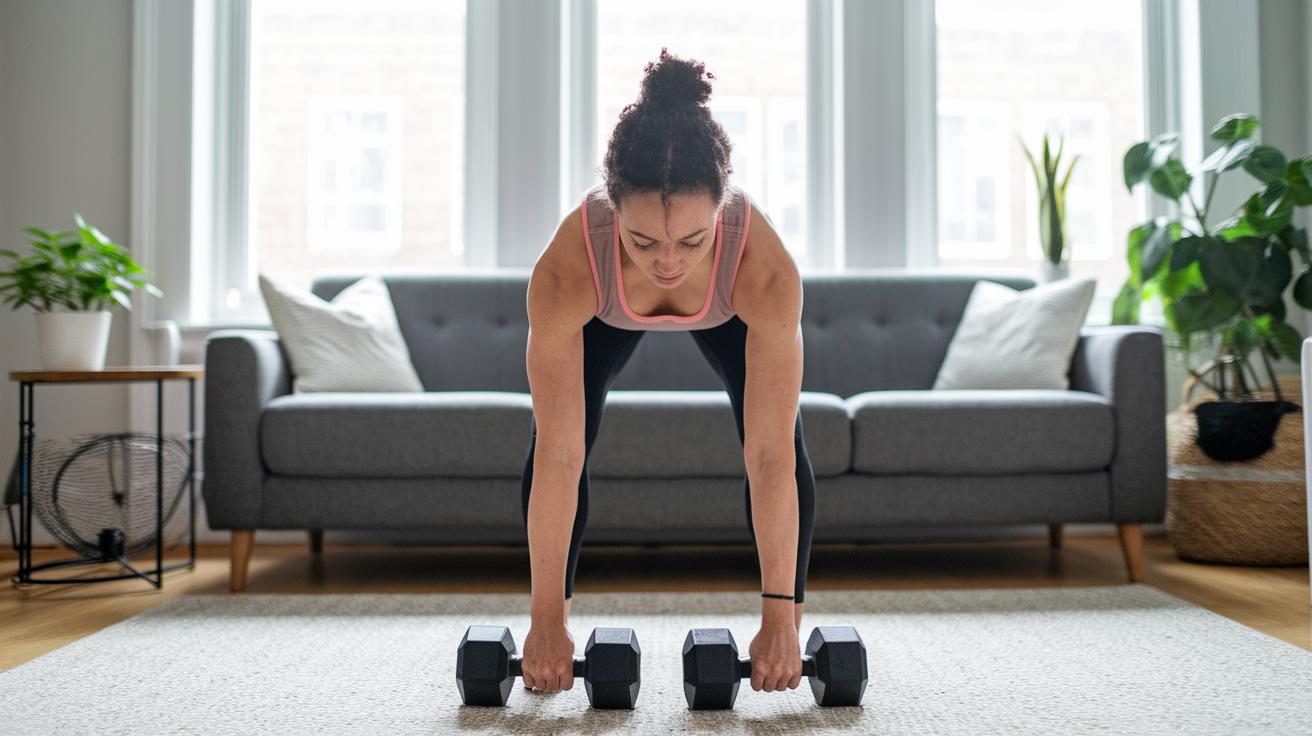
Working out at home can be both fun and effective if you mix up your routine a little. Try changing your body stance or switching how you hold the dumbbells, like using a regular grip one minute and a neutral grip the next. These small shifts help you work different parts of your back for balanced strength.
It pays to start light and add more weight gradually as you practice good form and build confidence. Keep an eye on factors like how fast you move the weights, how many times you repeat an exercise, the total number of sets, and the rest between them. These details help make your workout challenging yet safe.
Also, building muscle isn’t just about what you do in your workout. Your nutrition matters, too. Eating enough protein, around 1.6 to 2.2 grams per kilogram of your body weight, and keeping a slight extra calorie intake will really support your muscle growth.
When you lift, focus on smooth, controlled movements, especially when you’re lowering the weight. And if you’re switching between sets, experiment with different opponent repetition ranges so you can work on strength and endurance. These tweaks make a big difference, whether you’re lifting for muscle size, strength, or stamina.
| Goal | Reps | Sets | Rest |
|---|---|---|---|
| Strength | 4-6 | 4-5 | 2-3 min |
| Hypertrophy | 8-12 | 3-4 | 60-90 sec |
| Endurance | 15-20 | 2-3 | 30-45 sec |
Keep these tips in mind as you build your back workout routine. Small changes can lead to big improvements, and pairing proper training with good nutrition can really boost your strength over time. Enjoy your workouts and listen to your body as you progress!
Final Words
In the action, this post breaks down warm-up movements, dynamic dumbbell rows, lat isolation moves, and targeted lower back drills with clear, friendly steps. The guide also touches on adjusting training settings and mindful eating to support muscle gains.
Take these easy tips to heart and enjoy your routine. Remember that small, deliberate changes can make a big impact. Keep moving forward with back exercises at home with dumbbells and let that positive energy fuel a stronger, healthier you.
FAQ
How does a back workout with dumbbells benefit females?
A back workout with dumbbells benefits females by improving posture and muscle tone. It includes exercises like bent-over rows and pullovers that help sculpt and strengthen the back steadily.
How do I perform lower back exercises at home with dumbbells?
Lower back exercises at home with dumbbells involve moves such as Romanian deadlifts and modified good mornings that gently strengthen your lower back and enhance stability for everyday activities.
How can I do dumbbell back exercises without a bench?
Dumbbell back exercises without a bench work by using exercises like bent-over rows and single-arm rows. Adjust your stance and hinge at the hips to safely target your back muscles.
How can I plan a back workout at home without equipment?
A back workout at home without equipment uses bodyweight moves like pull-ups and scapular push-ups. These exercises help engage your back muscles and support a balanced strength routine.
How do I create a v-shape back workout with dumbbells?
A v-shape back workout with dumbbells focuses on exercises like pullover variations and different row types to widen your upper back and sharpen your overall back definition.
What does the dumbbell pullover exercise target?
The dumbbell pullover targets your upper back and lat muscles. It helps expand the chest area while working the muscles that create a broader, more defined upper-body look.
How do I include dumbbell back exercises using a bench?
Dumbbell back exercises with a bench allow you to perform moves like seal rows safely. Using the bench offers extra support to isolate mid-back muscles and perfect your exercise form.
How can I build my back at home with dumbbells?
Building your back at home with dumbbells involves a mix of exercises like bent-over rows, single-arm rows, and pullovers. These moves work together to target the upper, mid, and lower back.
What is the most effective back exercise at home?
The most effective back exercise at home is often the bent-over dumbbell row since it works multiple back muscles while engaging your core for stability during the move.
Are three workouts enough for the back?
Three well-planned back workouts can be sufficient if they cover various muscle groups and exercise types. Consistency and proper form make these routines effective over time.
How can I tone my back quickly?
Toning your back quickly comes from combining exercises such as rows, pull-ups, and pullovers with a balanced routine and proper nutrition. Regular activity and mindful form help speed up results.