Ever wonder if you're really giving it your all? HIIT workouts mix short bursts of almost all-out energy with little breaks to let you catch your breath. Some people worry they might be overdoing it, while others love knowing exactly how hard they're working. In this post, we'll show you in simple language how to listen to your body and check how intense your workout really is. Get ready for a few easy tips that can help you work smarter and boost your fitness.
Measuring and Controlling HIIT Workout Intensity

HIIT is all about pushing your limits in quick bursts and then taking a breather. You work really hard, almost at your max effort, and each burst is rated on a scale from 1 to 10, with 10 being your absolute best. Most sessions last between 20 and 45 minutes, and lots of people follow a 29-minute routine that cycles 20 seconds of hard work with 10 seconds of rest. This setup makes it super simple to monitor how hard you're working using everyday cues.
Before you jump into a HIIT workout, start with at least 5 minutes of warm-up. Try slowly increasing your treadmill speed, adding a bit of incline, or doing some foam rolling. A handful of core exercises and balance drills can also help wake up your muscles. For instance, why not spend 5 minutes jogging lightly while doing some dynamic stretches to get your joints and muscles ready for the challenge?
During your workout, focus on moving both your upper and lower body at the same time. This dual move helps you burn more calories by upping your oxygen use. Equipment like rowing machines or bikes with moving arms can be a big help here because they adjust resistance automatically as you pick up the pace, so you don’t need to fiddle with settings.
| Metric | Description | Typical Range |
|---|---|---|
| RPE | Effort scale where 10 is maximum | 7–10 during bursts |
| Heart Rate | % of age-predicted max heart rate | 80–95% during work intervals |
| Work-to-Rest Ratio | Time spent working versus recovering | 2:1 (e.g., 20 sec work/10 sec rest) |
| VO₂ Max Intensity | % of oxygen capacity used | 85–95% during peak efforts |
Remember to keep things safe by limiting HIIT workouts to just two or three sessions per week. Make sure you give yourself at least 48 hours between sessions so your muscles can repair and your energy systems can reset.
Key Metrics for Tracking HIIT Intensity
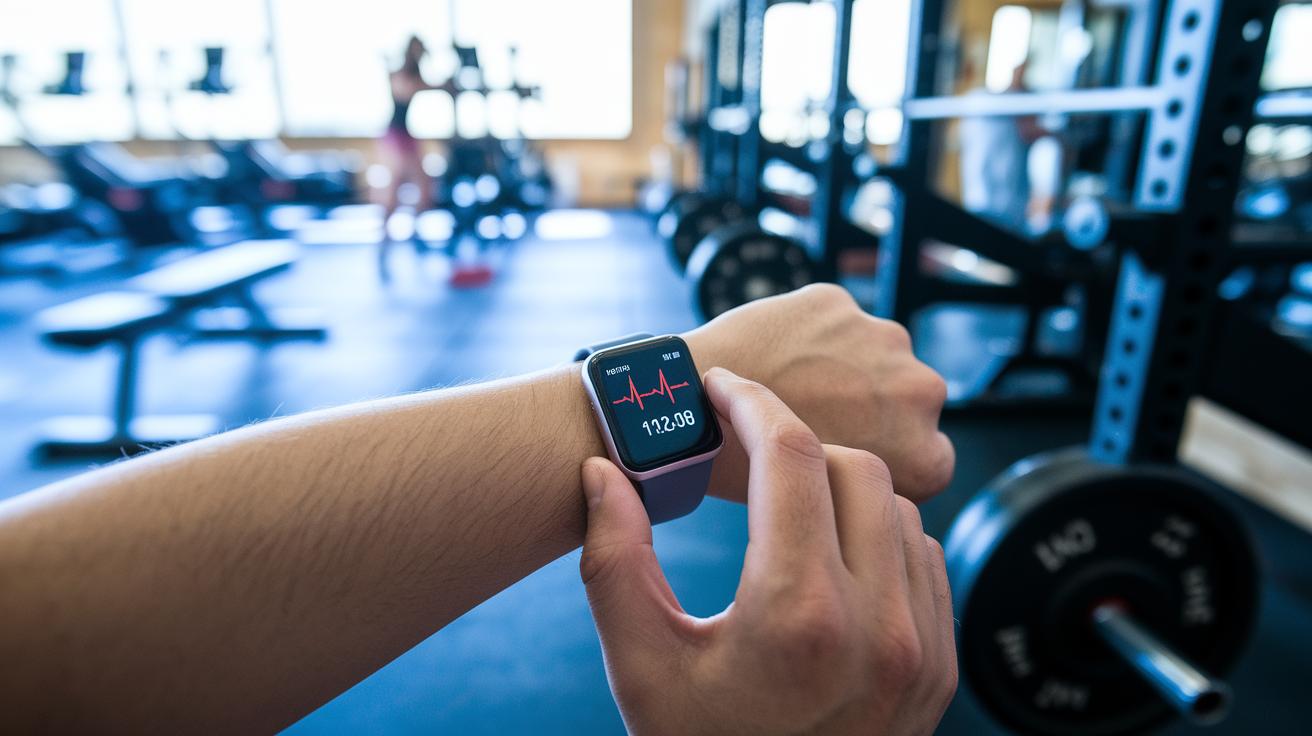
Design your workout by focusing on real performance numbers. Instead of only watching your RPE, heart rate, work-to-rest ratios, or VO2 max percentages, think of these numbers as handy guides to fine-tune your active and rest periods as you go.
Here's a handy tip: if your effort level feels below 7 during your work intervals, try cutting down the rest time to crank up the intensity.
| Metric | Description | Typical Range |
|---|---|---|
| Rate of Perceived Exertion (RPE) | Your personal 1–10 scale of effort | 7–10 for high intensity |
| Heart Rate | Percentage of your age-predicted maximum | 80–95% of max |
| Interval Ratio | Balance between work and rest | 2:1 to 1:1 |
| VO2 Max Intensity | Percentage of your maximum oxygen use | 85–95% |
Try these ideas to put the numbers to work for you:
- Keep an eye on your heart rate sensor to dodge any false readings. If your heart rate climbs too steadily at the start, you might need to tweak the duration of your work periods.
- Jot down your RPE for each interval. This record can guide you in balancing the work and rest times better.
- Compare your numbers to these typical ranges. For instance, if your heart rate is stuck near 80% during what should be a high-intensity session, it might be time to shorten your rests.
Watch out: beginners often stick with just the RPE and miss a subtle jump in heart rate. Make sure to keep an eye on both to get a well-rounded picture of your workout intensity.
Understanding hiit workout intensity: Boost Your Fitness

In a HIIT workout, you usually blast through bursts of intense effort that last anywhere from 20 to 60 seconds. Short bursts can make your heart race in just a few seconds, while longer ones really challenge your muscles and stamina. For example, a quick 20-second round of burpees might feel like an 8 out of 10 in effort, but a full 60 seconds can push you right to your limit.
Rest periods matter a lot too. Quick 10-second breaks, like those in a Tabata session, keep the tempo high but might leave you gasping for air. Longer rests, up to 3 minutes, give you a chance to catch your breath so you can put in quality effort every time. And it isn’t just about the clock; the type of exercise counts as well. Moves like jump squats can spike your heart rate faster than some strength moves, while machines often adjust resistance automatically as you work.
Remember, how tough your HIIT session feels also depends on your fitness level, the workout setting, and the equipment you use. If you’re just starting out, you might choose shorter bursts or longer recovery times. If you’re more experienced, you might go almost all out every round. Have you noticed how sometimes, even small changes like space or machine settings can tip the scale on your workout intensity?
Optimizing HIIT Intensity for Maximum Results

Remember the basics we covered before about warming up and balancing upper and lower body moves. Today, let's chat about how to slowly make your HIIT workouts tougher with gradual increases.
Progressive Overload
Start by easing into your HIIT sessions. If you begin with 30-second bursts followed by 30 seconds of rest, try adding five extra seconds to your burst and shaving five seconds off your rest every few weeks. For instance, after a couple of workouts, switch to 35-second bursts with 25-second rests. Each small change pushes your limits just a bit more.
Mix up your drills too. If burpees and lunges start to feel too easy, add a jump or a shoulder tap with your burpees. When the effort starts to feel less challenging, that's your cue to slowly up the intensity again.
Also, keep an eye on how hard you're working. If you notice you're finishing your rounds too comfortably, think about adding more intervals or cutting your rest time a little more to keep things fresh and challenging.
Equipment Choices
If you're using equipment, pick machines that let you adjust resistance as you speed up. Machines like rowing ergometers or bikes with arms that move naturally increase the effort as you go faster. And if you're working out at home, bodyweight exercises are a safe way to add more challenge gradually as you get stronger.
Recovery and Scheduling for HIIT Intensity Management

When you work hard with HIIT, giving yourself enough time to recover is key. Try taking breaks of up to three minutes between your high-intensity sets. This lets your heart slow down to around 60% of its max, if it gets to 60% in two minutes, add a little extra time, like half a minute, just to be sure you’re ready for the next round.
On days when you're not pushing hard, include some active recovery. Think about light cardio, gentle stretching, or even a short, easy walk. A simple 20-minute walk can help loosen your muscles and boost blood flow, setting you up nicely for your next workout.
Supporting these rest days with good sleep and balanced meals is a must. When you sleep well and eat foods like whole grains, lean proteins, and plenty of veggies, your body repairs itself more effectively. Aim for 7 to 8 hours of sleep and make meals count, this way, you keep your energy steady and your muscles ready to perform at their best.
Final Words
In the action, this article broke down key methods to manage HIIT workout intensity. It explored how to track performance using simple scales and heart rate insights and highlighted the need for a proper warm-up. The text explained how burst durations, rest periods, and exercise types shift the overall intensity of your HIIT sessions. Plus, it covered the significance of recovery days to keep energy levels high. Understanding hiit workout intensity can truly boost your fitness and support a vibrant, healthy lifestyle.
FAQ
What does understanding HIIT workout intensity for beginners mean?
Understanding HIIT workout intensity for beginners means recognizing short bursts of near-max effort balanced with recovery. Beginners use a simple 1–10 scale to gauge exertion while monitoring heart rate for safe progress.
What are the disadvantages of HIIT training?
The disadvantages of HIIT training include higher risk of injury if form or recovery isn’t prioritized, potential overtraining, and increased fatigue for those new to intense exercises.
What is the advantage of HIIT training?
The advantage of HIIT training is that it burns calories quickly, improves cardiovascular health, and fits busy schedules through short, focused sessions that deliver measurable fitness gains.
How can I find a HIIT workout plan PDF?
A HIIT workout plan PDF offers a clear, step-by-step session design to guide your workouts. Look online at trusted fitness websites that provide downloadable plans for various fitness levels.
What should beginners know about HIIT?
HIIT for beginners means starting gently with shorter high-intensity bursts and longer rest intervals. This approach builds endurance and strength safely as you grow more confident.
How does high-intensity training apply to bodybuilding?
High-intensity training in bodybuilding uses brief, powerful exercise bouts to stimulate muscle growth and boost metabolism, complementing traditional lifting by adding dynamic, high-energy movements.
What are some common HIIT exercises and high-intensity examples?
HIIT exercises include burpees, jump squats, and push-ups. High-intensity examples also cover sprint intervals and Tabata drills, each designed to push your heart rate and challenge muscle strength quickly.
How intense should my HIIT be?
Your HIIT should hit around a 7–10 rating on a perceived exertion scale. This means giving near-max effort during bursts while keeping proper form to safely push your limits.
What is the 30 20 10 rule for HIIT?
The 30 20 10 rule for HIIT breaks a session into parts—a 30-second moderate pace, a 20-second near-max effort, and a 10-second all-out burst—repeated to steadily increase intensity.
Is the 7-minute workout considered HIIT?
The 7-minute workout qualifies as HIIT when it alternates rapid, high-intensity moves with short rests, effectively raising your heart rate and offering a quick, efficient exercise option.
How should you structure a HIIT workout?
Structuring a HIIT workout involves a 5-minute warm-up, several cycles of high-intensity bursts paired with rest, and a cool-down period. This setup maximizes performance while reducing injury risk.
What roles do Tabata protocol, circuit training, aerobics, and plyometrics play in HIIT?
Tabata, circuit training, aerobics, and plyometrics provide varied methods to perform HIIT. Each method adapts work-to-rest ratios and exercise choices to boost heart rate and overall fitness effectively.
What is a burpee in a HIIT context?
A burpee is a full-body move used in HIIT involving a squat, push-up, and jump. It quickly raises heart rate and builds strength, making it a staple exercise in high-intensity routines.