Have you ever wondered if you can feel more energetic without leaving your chair? Many older folks feel workouts are just too hard.
Our simple chair routines are made up of easy, gentle moves that help build strength (your muscles getting a bit stronger), balance (staying steady on your feet), and flexibility (your joints moving easily).
Just a few minutes a day can turn your chair into your own little workout spot. Imagine feeling more lively and confident while keeping your joints happy and safe.
senior exercise chair routines: Energize with ease
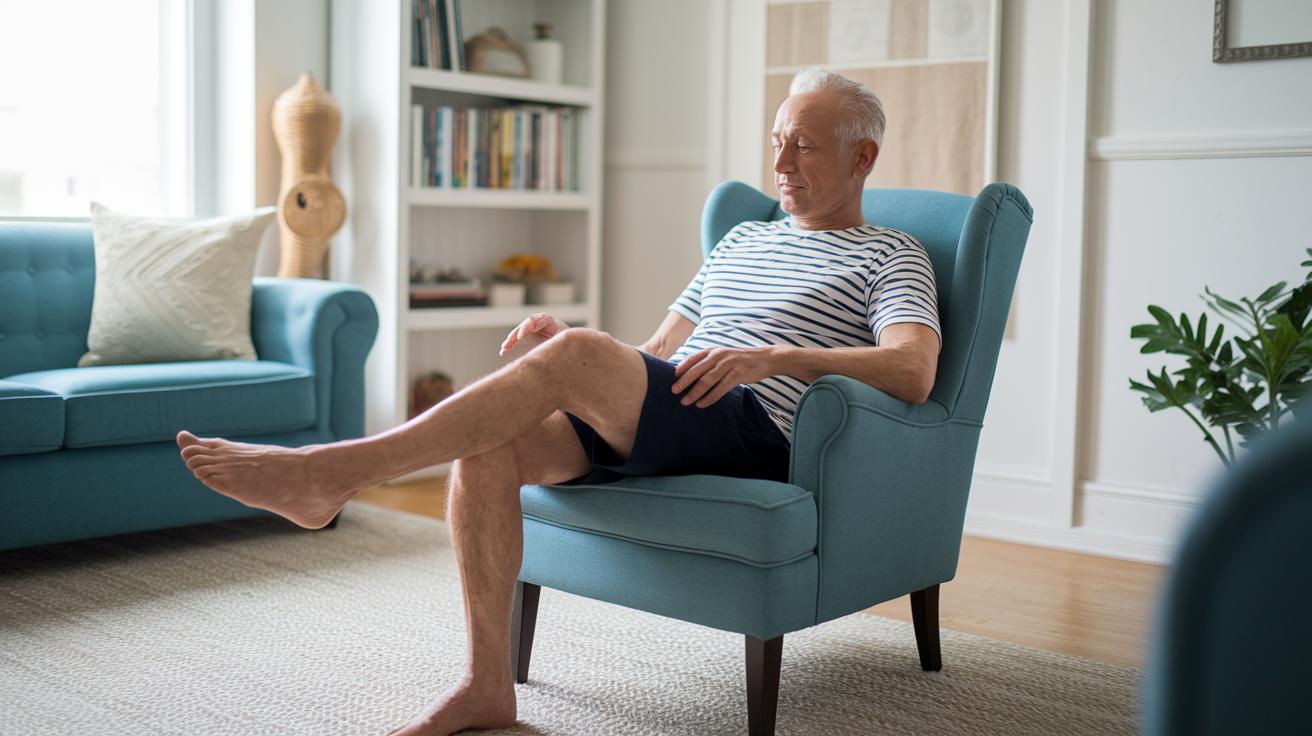
We’ve put together a simple program with 10 safe chair exercises you can do at home. These gentle moves are made just for seniors to help you move easier, get stronger, and keep your balance steady, all while easing the pressure on your joints. Did you know only about 15% of seniors aged 65 to 74 and just 5% of those over 85 work out regularly? Every little movement counts. Remember to sit up straight with a small gap between your lower back and the chair, keep your feet flat on the floor, and feel free to use the chair sides for extra support.
Try out beginner moves like knee extensions, where you lift your leg slowly to improve your lower-body flexibility, or seated marches that give your heart a gentle boost. For building strength, consider a seated row by pulling a towel or band with your arms, or an overhead press with light water bottles to tone your arms and shoulders. And for better balance, try sit-to-stands, using the armrests for help if you need it, to lower your risk of falling.
The exercises are designed to be safe and friendly on your joints. Picture doing controlled toe lifts each day, feeling your strength and agility grow little by little. This well-rounded chair workout mixes moves that boost mobility, build strength, and improve balance to help you feel more lively and secure at home. So, go ahead and embrace a routine that brings better mental and physical health right to your chair.
Correct Posture and Safety Guidelines for Senior Chair Workouts

Begin by organizing a safe workout space. Place a sturdy chair on a non-slip surface so it stays in place. Make sure the chair's seat is wide and firm enough to support your hips while you move. If the seat seems too hard, try adding a cushion just for a bit more comfort.
Keep your back straight and your feet flat on the floor during each exercise. You can hold onto the armrests or the sides of the chair for extra support. For example, imagine slowly turning your torso while your feet stay planted firmly on the ground. Each twist can help ease the tension in your back.
Before you try any new exercises, or if you feel discomfort, talk with your doctor or physical therapist. They can make sure that your chair and movements are a good fit for your body.
| Tip | What to Do |
|---|---|
| Stable Surface | Place the chair on a flat, non-slip area |
| Extra Balance | Use the chair sides for support if needed |
| Supportive Seat | Select a chair that keeps your hips and lower back secure |
If anything seems off with your setup, adjust your chair or any support tools. Make sure each movement feels secure, keeping your exercise both safe and effective.
Effective Warm-Up Movements in a Seated Position

Ease into your workout with some gentle stretches that get you set for more movement. Start with a simple neck rotation. Slowly turn your head like a clock hand, making 5 turns to the left and then 5 to the right. This gentle twist helps loosen up your neck and clear away any tightness.
Next, try shoulder shrugs. Lift your shoulders up toward your ears, then let them fall back down. Do this 10 times to wake up your upper body and get your blood flowing.
After that, move on to wrist circles. Hold your arms steady and slowly rotate your wrists 10 times in one direction, then 10 times the other. This small movement is great for getting your hands ready for everyday tasks.
Now, sit up tall and try seated torso twists. Gently twist your upper body to the left 10 times, then do 10 twists to the right. This exercise helps engage your core and boosts your flexibility.
Finally, finish with ankle circles. Lift one foot and slowly rotate your ankle 10 times, then switch to your other foot. These moves help increase circulation and reduce injury risk.
Each of these seated stretches is a straightforward way to warm up. They get your muscles ready for action while being gentle and easy to do.
Chair-Based Mobility Enhancement Exercises for Seniors

Sit up straight and keep your feet flat on the floor. Slowly lift one leg so it lines up with your hip. Hold it for 2 seconds before you lower it back down. This move helps build leg strength and keeps your joints stable. Imagine gently reaching upward in a calm and steady way.
Next, press your heels into the floor and lift your toes as high as you can. This little exercise wakes up your feet, just like a gentle morning stretch. Then, try a seated march by lifting each knee alternately toward your waist. Keep your pace smooth and controlled so you feel safe. Picture carefully stepping over small gaps with each lift.
Now, try a different move, the seated hip stretch. Cross one ankle over the opposite knee and lean forward until you feel a soft stretch in your hip. Hold this posture for 20 seconds and then switch sides. This move helps ease tension in your lower body while you stay securely seated.
Tip: Move slowly, breathe evenly, and avoid any quick actions to stay in control and prevent discomfort.
| Exercise | Instructions |
|---|---|
| Seated Knee Extension | Lift one leg, hold for 2 sec, 10 reps each leg |
| Toe Lifts | Heels grounded, lift toes, 15 reps |
| Seated March | Alternate knee lifts reaching waist height, 20 steps |
| Seated Hip Stretch | Cross one ankle over opposite knee, lean forward, hold 20 sec each side |
Seated Strength-Building Movements to Tone Aging Muscles

In your regular chair workouts, try these simple moves to strengthen your upper body and core while keeping things safe and easy. They work well even when you're sitting down.
First, try the seated row. Hold a resistance band or a towel with both hands. Slowly pull your elbows back, focusing on your back muscles. Do 12 slow pulls and aim for 3 sets. Imagine gently drawing a towel so you feel your back working with each pull.
Next, try an overhead press. Sit upright with your feet flat on the floor. Hold light weights like water bottles or cans, and slowly press your arms upward. Aim for 10 presses in 3 sets. Picture lifting something light and feeling steady with every raise.
Another great move is the seated shoulder press. Start with your weights at shoulder height and lift them slowly. Pause for about 2 seconds at the top before lowering them again. Do 12 presses. Think of that pause as a chance to really work your muscles.
Lastly, try extended leg raises. Lean back slightly while sitting and lift both legs together. Do 10 lifts and complete 2 sets. Imagine gently raising your legs while keeping your tummy muscles firm and active.
Balance-Boosting Chair Routines to Prevent Falls
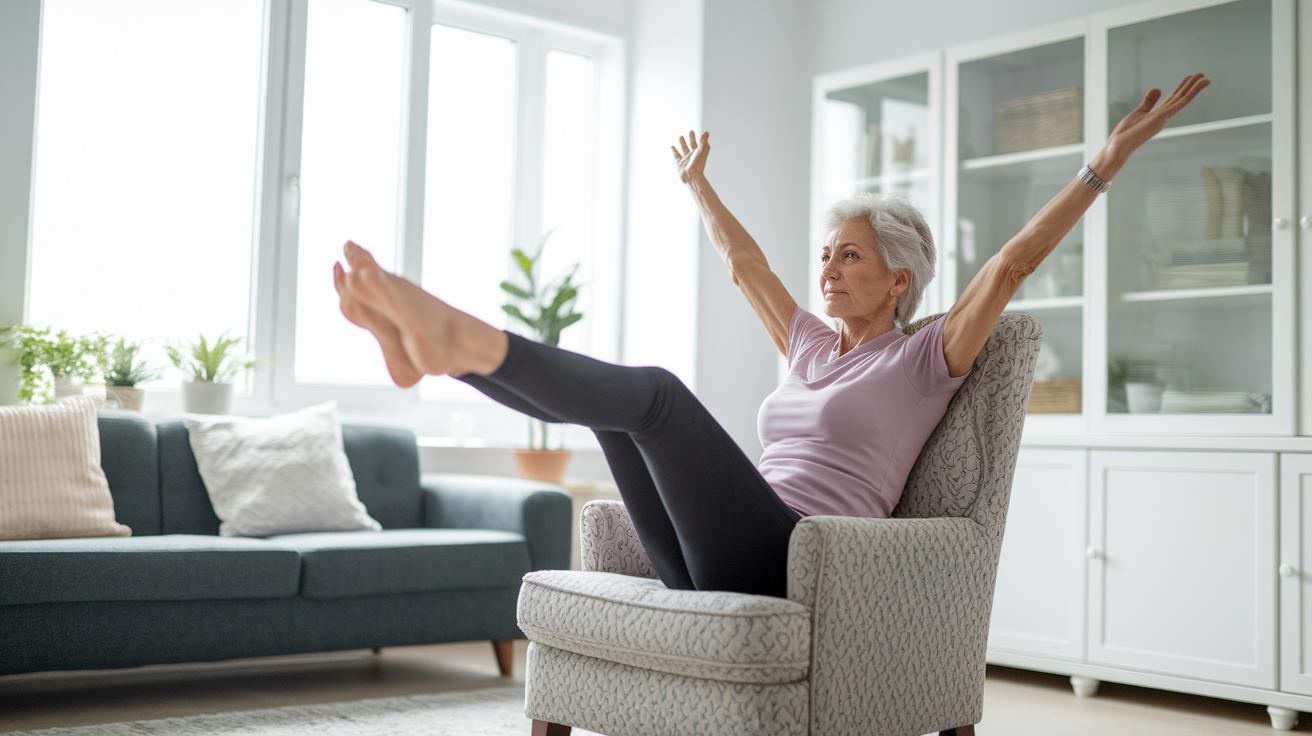
Staying steady is really important for reducing your risk of falling. Today's chair exercises mix balance-building moves with stability training to help you feel safe while sitting or leaning on your chair. Try these exercises slowly, you might be surprised at how even small efforts make a big difference. Imagine opening your arms and legs in your chair, just like you're doing a mini jumping jack.
-
Seated Jacks: Sit up straight and without leaving your seat, spread your arms and legs wide as if doing jumping jacks. Aim for 15 smooth, easy repetitions.
-
Sit-to-Stands: Keep your feet about shoulder-width apart. Use your armrests if you need to while you slowly stand up and sit back down. Try for 10 gentle repetitions to build up your strength over time.
-
Single-Leg Lift: While you’re sitting, lift one foot a few inches off the floor and hold it up for about 5 seconds. Do this 8 times on each side to help boost your coordination.
These simple moves can really improve your balance and overall stability. Take your time with each exercise and enjoy how even small changes can boost your confidence and help you feel more secure every day.
Restorative Seated Yoga Poses and Gentle Stretches
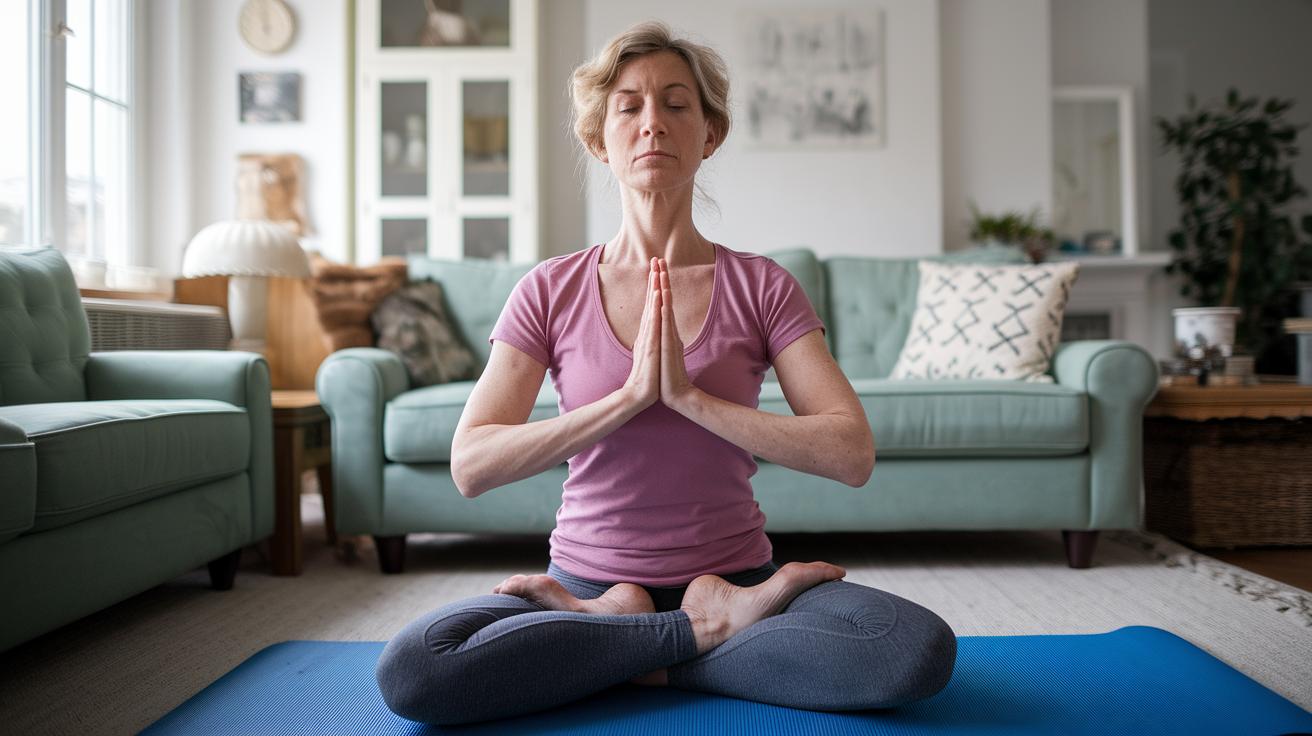
Ease into a soothing chair yoga flow that helps relax your body and boost your posture. Start with the seated Cat-Cow by picturing your back slowly arching, like a gentle stretch, and then rounding to let go of any tension. Do this eight smooth cycles, it can feel like a mini dance for your spine.
Next, try a seated forward fold. Lean forward at your hips and reach toward your shins until you feel a soft stretch along your back and legs. Stay here for about 20 seconds and take a moment to leave your worries behind.
After that, give Eagle Arms a try. Cross your arms gently as if you're giving yourself a tender hug, then raise your elbows until they're level with your shoulders. Hold this pose for 20 seconds to help ease any shoulder tension.
Finally, finish with a chest opener. Clasp your hands behind your back and softly squeeze your shoulder blades together. Hold for 20 seconds and imagine opening up your chest to enjoy a steady, relaxed breath.
Adapting Chair Routines for Different Ability Levels

When you exercise in your chair, each move can be tailored to fit how you feel. You can change things like how far you move or how many times you repeat a motion. For example, if fully straightening your knee feels too hard, try doing gentle ankle pumps instead. Imagine softly tapping your toes in place. It’s a small shift that keeps your legs moving without any strain.
Extra support can really boost your confidence. When you’re practicing sit-to-stands, keep your hands on the armrests to steady yourself as you rise and sit back down. Picture yourself slowly lifting from the chair while holding the sides until you feel strong enough to try without that extra help.
You can also make the workout easier or tougher by adjusting the speed of your movements. If a move feels too quick, slow it down so you can control every step. Over time, as you get more comfortable, you might add a few more repetitions or even increase your speed for a bit more of a challenge.
- Change the range of motion to match your comfort level.
- Adjust the number of repetitions to slowly build your strength.
- Use the armrests or sides of your chair for extra support during exercises.
These simple tweaks ensure your chair workout stays safe and fun, no matter your ability level.
Building a Daily Schedule: 10-Minute and 30-Minute Senior Chair Sessions

If you're short on time, try our simple 10-minute routine to give you a quick boost and keep your body in motion. Begin with a gentle warm-up to wake up your muscles. Next, carry out two easy mobility exercises, aiming for 10 repetitions each. Then, move on to two strength exercises, performing 8 slow, controlled reps each. Finish with a cool-down stretch to help relax your muscles.
For example:
| Step | Exercise | Duration/Reps |
|---|---|---|
| Warm-up | Neck rotations and shoulder shrugs | 1-2 minutes |
| Mobility | Knee extensions and seated marches | 10 reps each |
| Strength | Seated rows or overhead presses (using water bottles) | 8 reps each |
| Cool-down | Gentle stretch for the arms or legs | Hold for a few seconds |
If you have a bit more time, go for the 30-minute session. This extended routine builds on the short set by adding three extra exercises and holding each stretch a little longer. These extra moves might include a balance exercise, a deeper seated stretch, and another mobility movement to further improve your flexibility.
Try to do the 30-minute routine three times a week, or if you prefer, stick with daily 10-minute sessions. Keep a simple log of your reps and note when each move starts to feel easier. This little track of progress can show you how far you've come.
Equipment Checklist, Visual Tutorials, and Downloadable Guides
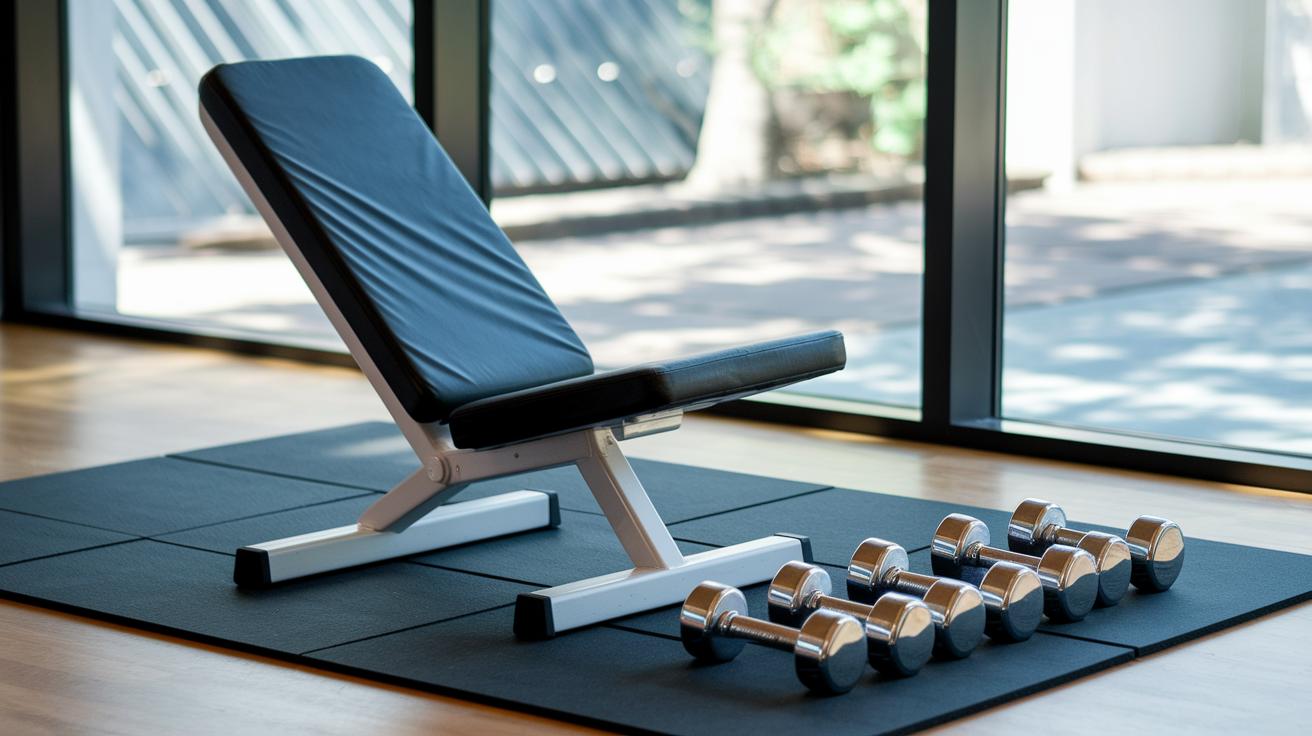
Before you begin your workout, make sure you have a few tools to keep you safe and comfortable. Grab a sturdy, armless chair with non-slip feet to help you stay steady during each exercise.
You might want to add some extra helpful items like light dumbbells, a resistance band, or even a towel. Light dumbbells give you a bit more weight for gentle strength moves, and a resistance band can help stretch and tone your muscles. Plus, a towel can be used for extra support when needed. Imagine following clear photos or video tutorials that show you exactly how to get the right form. Picture a short clip of someone using a stable chair to do controlled sit-to-stands, it really helps to see the move in action.
For a bit more help, why not download a PDF exercise guide? This free manual outlines each move with clear instructions, rep counts, and safety tips so you can work out at your own pace.
| Item | Purpose |
|---|---|
| Sturdy, Armless Chair | Keeps you steady and secure |
| Light Dumbbells | Add gentle resistance for strength moves |
| Resistance Band | Helps stretch and tone your muscles |
| Towel | Offers extra support when needed |
Final Words
In the action, we covered safe, practical movements that boost mobility, strength, and balance. We broke down warm-up techniques, correct posture tips, and easy modifications for every ability level. We also shared simple schedules to fit exercises into your daily routine. Every step builds toward a healthier, happier lifestyle. Keep practicing those senior exercise chair routines, and remember that small, steady changes can lead to lasting improvements. Enjoy each moment as you move forward with confidence and care.
FAQ
What are chair exercise PDF guides for seniors?
Chair exercise PDF guides offer free, easy-to-follow routines designed for seniors. These guides provide safe exercises to boost strength, balance, and mobility using a simple chair setup.
Can seniors over 70 benefit from chair workouts?
Chair workouts are effective for seniors over 70. They build strength, enhance mobility, and improve balance safely—making them ideal for those seeking gentle, supportive exercise methods.
Do chair exercise routines without equipment work for seniors?
Chair exercise routines without equipment are effective in improving flexibility, strength, and balance. Using just a sturdy chair helps seniors perform safe movements without the need for additional gear.
Are there seating exercise videos for seniors on YouTube?
Yes, YouTube offers many seating exercise videos for seniors. These videos provide visual instructions to help seniors learn and perform safe chair workouts that enhance strength and balance.
Are chair workouts suitable for beginners?
Chair workouts designed for beginners feature simple, low-impact movements. They help build confidence and improve overall mobility, making them a great starting point for seniors new to exercise.
Does a 10-minute chair workout yield benefits for seniors?
A 10-minute chair workout can improve circulation, flexibility, and muscle strength. Regular short sessions are beneficial for maintaining overall physical health and enhancing daily mobility.
Do chair workouts effectively improve seniors’ health?
Chair workouts effectively improve seniors’ health by enhancing strength, balance, and mobility. Regular sessions reduce injury risk and promote better mental and physical well-being.
How often should seniors perform chair exercises?
Seniors can benefit from chair exercises three times a week or even daily short routines. Consistent practice helps maintain mobility, boosts strength, and supports overall daily functioning.
Does a 7-minute chair workout deliver results for seniors?
A 7-minute chair workout can offer quick benefits when done regularly. It engages major muscle groups and improves circulation, especially when integrated into a balanced exercise routine.
Do seated exercise programs work for seniors?
Seated exercise programs effectively engage muscles and improve joint mobility. They offer a safe, accessible way for seniors to stay active and boost overall physical health.