Have you ever thought that a few extra reps might truly change your body? Strength training is not just about lifting weights. It pushes your muscles to work hard, helping them get stronger and even grow in size.
Every workout makes tiny tears in your muscles. When these tears heal, your muscles become bigger and more powerful. Imagine your hard work adding up over time, each session acts as a small step toward a healthier, fitter you.
In this blog, we'll share easy workout tips and clear steps that show how steady effort can lead to real muscle growth. With each session, you can build a stronger body and feel even more confident in yourself.
Strength Training Fundamentals for Muscle Gain

Muscle growth happens when you challenge your muscles enough to create tiny tears that later repair and get stronger. It works through factors like mechanical tension (the pull on your muscles), metabolic stress (the buildup during exercise), and tiny muscle injuries. Weightlifting is a safe way to trigger these changes. Think of it like this: each time you lift, your muscles adapt and grow, giving you more strength.
A solid plan looks at how often you work out, how many sets and reps you do, and how heavy the weights are. Try to exercise each muscle group 2 to 4 times each week. Your total work (sets multiplied by reps) plus the weight you choose works together to encourage growth. Did you know that tiny increases over time, like adding one more rep or a bit more weight, can really boost muscle size? Each session builds on the last.
- Progressive overload (gradually increasing the challenge)
- Training volume (total sets and reps)
- Workout frequency (how often you train)
- Exercise selection (mixing big compound movements with smaller, focused ones)
- Proper technique (using correct form)
When picking between free weights and machines, it often comes down to your personal goals. Free weights allow for more natural movements and help improve balance and stability, while machines can guide your motion and let you focus on one muscle at a time. For instance, doing squats with free weights makes your core and balance work hard, unlike the guided motion of a machine.
Understanding these basics sets you up for long-term muscle growth. By mixing different exercises, planning smart workouts, and paying attention to the details, you'll consistently challenge your muscles, leading to steady gains over time.
Crafting Muscle Building Workouts: Structuring Strength Training Sessions
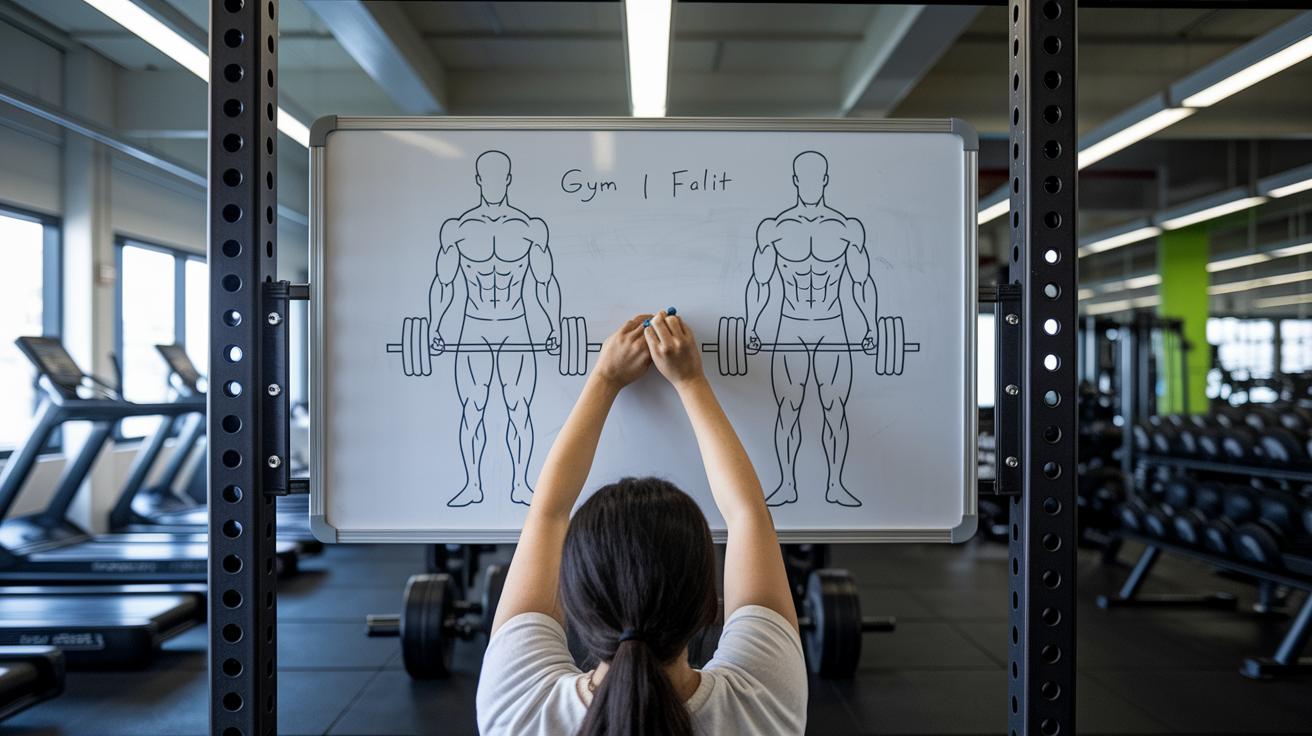
When you set up a workout, it helps to plan how different exercises fit into your day. Balance is important when building muscle. Whether you pick free weights that work many muscles or machines that target one at a time, your plan should include sessions that work your whole body as well as some that focus on specific parts. Keep in mind the rep range of 6 to 12 per set and aim for 3 to 5 sets for each exercise to help your muscles grow.
Full-body workouts work best if you exercise three times a week. In these sessions, you cover all the main muscle groups in one go. Think of doing moves like squats, bench presses, and rows for a well-rounded workout. For example, you might start with dumbbell bench presses, move on to weighted squats, and wrap up with barbell rows. This blend builds balanced strength and gives your muscles time to rest between sessions.
Split workouts take a different approach by breaking your routine into parts. You might organize your days by pushing, pulling, or working on legs, or by splitting upper and lower body workouts. This method lets you focus on particular muscles while giving them extra time to recover. One day could be for chest, shoulders, and triceps, and another for back and biceps, with a separate day for legs. This style is great if you want to sharpen your focus and boost your muscle gains.
| Program Type | Frequency | Sets/Reps | Example Exercises |
|---|---|---|---|
| Full-Body | 3× Weekly | 3–5 Sets / 6–12 Reps | Squats, Bench Press, Rows |
| Split Routine | 4–6× Weekly | 3–5 Sets / 6–12 Reps | Push/Pull/Legs, Upper/Lower |
Think about your own goals, how much rest you need, and the days you can train when choosing your plan. Mixing full-body workouts with split routines can help you build muscle steadily and achieve the look you want.
Progressive Overload and Hypertrophy Techniques for Muscle Growth

When you use progressive overload, you slowly make your workouts tougher so your muscles can grow stronger. You might add a little more weight, do one extra rep, or add another set every week. Imagine doing one more push-up each time and feeling your muscles tighten up more and more. Little changes like this can make a big difference over time.
Another way to boost muscle strength is by focusing on time-under-tension. This means you lift slowly and in a controlled way so your muscles work hard for a bit longer. You can also try high-volume training where you do many sets and reps. These ideas help create the kind of stress that tells your body to build muscle and get bigger, lift by lift.
Planning your workouts in different phases can also help you keep moving forward. You might do heavy lifting for a while then switch to days with lighter weights but higher reps. Changing up your routine like this keeps your muscles guessing, so your progress stays steady and you keep growing stronger.
Nutrition Essentials to Fuel Strength Training for Muscle Gain

Balancing your calories is the first step. Adding an extra 250 to 500 calories each day gives your body the fuel it needs to repair and build muscle. Think of it like adding fuel to a fire; those extra calories encourage your muscles to grow.
Getting enough protein is just as important. Try to have between 1.6 and 2.2 grams of protein per kilogram of body weight each day to help repair muscle tissue. For example, after a hard workout, a protein shake along with a handful of almonds can be the perfect way to jump-start recovery.
Carbohydrates and fats also have important roles to play. Carbs help refill your energy stores so you can power through your workouts, while fats support the hormones that keep your body balanced. You might choose whole grains and fruits for those energy-boosting carbs and foods like avocado or olive oil for healthy fats that help maintain steady energy all day.
Meal-prep ideas make it easier to stick with your plan, even on busy days. Spend a little time each week planning and cooking so nutritious meals are always ready when you need them. For instance, setting aside Sunday to portion out lean proteins and veggies can make healthy eating feel natural and simple.
Recovery Strategies to Support Muscle Repair and Strength Training Gains

Getting enough sleep is super important for building muscle. Try to get 7 to 9 hours of good sleep every night so your body can fix tissues and help muscles recover. Sleep works like a reset button for your body.
Taking rest days is just as crucial. On these days, your muscles heal from the workout stress, helping them grow stronger while cutting down on injury risks. It’s like giving your body a chance to catch its breath.
Doing some light exercise on your off-days can boost your strength gains too. A gentle walk or some easy mobility drills helps blood flow and brings fresh nutrients to tired muscles without overworking them. These small moves can really help ease muscle tightness.
Don’t forget to stretch. Start your workout with fun, moving warm-ups to get your body ready, then do some gentle static stretches after you finish to relax and loosen up your muscles. This simple routine not only helps with soreness but also makes everyday movements feel more comfortable.
Strength Training Routines: Gym and Home Plans for Muscle Gain

Choosing the right workout plan can really boost your progress, whether you're breaking a sweat at the gym or exercising at home. It's a bit like picking the perfect recipe that fits your style and the tools you have available. Some days call for a detailed gym program, while other days a simple home routine works just fine. What matters most is matching your plan to your current fitness level and your muscle-building goals.
One popular gym routine is the 4-day split plan. On the first day, you focus on push exercises like bench and shoulder presses. The next day, you work your back with moves such as rows and lat pulldowns. Day three is all about leg strength, using exercises like squats and leg presses. On the fourth day, you include a full-body accessory workout, such as kettlebell swings, to ensure every muscle gets attention and enough time to rest.
When you're training at home, a dumbbell-only plan can be a great choice. You can do goblet squats for your legs, single-arm rows for your back, overhead presses for your shoulders, and Romanian deadlifts for your hamstrings and glutes. Even with minimal equipment, this routine creates a balanced workout that activates multiple muscle groups at once. In a small space, these exercises help you build a strong foundation.
A bodyweight workout plan that progresses gradually is another smart option. Start with regular push-ups and then try decline push-ups when you're ready for a challenge. For your back, begin with standard pull-ups and move on to assisted pull-ups until you can do full pull-ups. Bulgarian split squats are great for boosting lower-body strength. This step-by-step progression pushes your limits gradually, helping your muscles grow over time.
Advanced Strength Training Techniques to Sustain Muscle Gain

Boost your workouts with new, exciting ways to challenge your muscles. Try switching up your routine with power sets, where you lift heavy weights for just 1 or 2 reps using about 80 to 90 percent of the heaviest weight you can handle. This helps push you past any plateaus and keeps your training fun and effective. Even small changes, like adding just 1 or 2 extra pounds, can really add up over time.
Mixing in different methods such as drop-sets, supersets, and cluster sets can take your workout to a whole new level. With drop-sets, you lower the weight once your muscles feel tired, giving them one more good push. Supersets let you do two exercises back-to-back, while cluster sets give you tiny breaks during a set so you can squeeze out a few more quality reps. These techniques make each session more intense, helping you build more muscle slowly and safely.
To keep improving without getting stuck, try switching up your routine every 4 to 6 weeks. Use auto-regulation strategies, basically, listen to your body and adjust your workout load and rest days based on how you feel. This smart approach helps you move forward steadily, making sure you keep getting stronger without risking injuries.
Final Words
In the action, this article broke down muscle-building basics. We talked about setting up effective training frequency, volume, and intensity. Then, practical workout structures, including gym splits and home routines, made it clear how to shape muscle growth.
We also touched on boosting recovery with proper sleep, active rest, and stretching, while balanced nutrition kept your body fueled. Advanced methods like drop-sets added a spark for those ready for an extra push.
Keep working with strength training for muscle gain and enjoy the progress each step brings.
FAQ
What is strength training for muscle gain at home?
Strength training for muscle gain at home helps you work muscles using bodyweight exercises, dumbbells, or bands. It builds muscle mass and enhances strength with routines you can complete in your personal space.
What are PDF-based strength training plans for muscle gain?
PDF-based strength training plans for muscle gain offer structured routines with exercise details, rep schemes, and rest times. They serve as ready references to guide your workouts and track your progress effectively.
What does a full week workout plan for muscle gain involve?
A full week workout plan for muscle gain organizes sessions by muscle groups and recovery days. It provides specific exercises, rep ranges, and sets to trigger muscle growth and ensure balanced development.
What strength training exercises help build muscle?
Strength training exercises for muscle gain include compound moves like squats, deadlifts, and bench presses. These exercises work multiple muscles at once, improving overall hypertrophy and boosting strength.
What does a 6-day gym workout schedule or best workout schedule for muscle gain look like?
A 6-day gym workout schedule or best workout schedule for muscle gain often splits training by body part or exercise type, ensuring sufficient volume, targeted work, and proper recovery each session.
What benefits does strength training offer for females?
Strength training benefits females by increasing muscle tone, boosting metabolism, and supporting bone health. It improves overall fitness and functionality without causing excessive bulk, enhancing everyday performance.
Can I build muscle with strength training?
Building muscle with strength training is achievable with regular, challenging workouts that use progressive overload. Such routines foster muscle growth, improve strength, and support better body composition.
What is the 3 3 3 rule for working out?
The 3 3 3 rule for working out refers to performing three sets across three exercises or rep ranges during a session. It creates a balanced approach to workload and intensity for effective muscle activation.
What is the 5 4 3 2 1 method of lifting?
The 5 4 3 2 1 method of lifting involves reducing the number of repetitions over five sets. This approach targets muscle fibers intensively, helps manage fatigue, and adds variety to strength training.
Is 30 minutes of strength training a day enough to build muscle?
Thirty minutes of strength training daily can promote muscle growth if the sessions are intense and include compound movements with progressive overload. Consistency and proper recovery further enhance muscle-building results.