Have you ever noticed that one deep breath can shift your whole mood? Mindful breathing turns a short pause into a refreshing reset. Techniques such as gently tracing a simple pattern with your fingers or imagining a square as you breathe help clear your mind and ease everyday stress. In this post, I’m excited to share simple ways to use mindful breathing to bring calm into your day. Just a few steady, clear breaths can give you a peaceful feeling that lingers.
Core Mindful Breathing Techniques for Everyday Calm
Have you ever taken a moment to just breathe? Focusing on your breath can help turn off that fight-or-flight feeling and switch on a sense of calm. Think of it as giving your body a gentle break from stress, anytime and anywhere.
One simple way to start is by trying hand tracing breathing. Hold your left hand at chest level and slowly use your right index finger to trace each finger. Breathe in as you move upward and breathe out as you move downward. Imagine gently brushing the stress away with each finger stroke. Start with just two minutes and work up to five or ten as you get more comfortable.
Box breathing is another neat trick. Picture drawing a small square with your breath. Inhale for four counts, hold for four counts, exhale for four counts, and pause for another four counts before you breathe in again. This steady rhythm can help clear your mind and relax your body during hectic moments.
Then there’s belly breathing. Place one hand on your stomach and notice how it rises when you breathe in and falls when you breathe out. For a twist, try extended exhale breathing: take a four-second inhale and then let your breath out slowly for at least six seconds. Both of these methods give a clear signal to your body that it’s time to unwind.
Advanced Mindful Exhalation Patterns to Reduce Stress

One great way to ease stress is by trying the 4-2-6 breathing exercise. First, breathe in slowly for 4 counts, then hold your breath for 2 counts, and finally, exhale gently for 6 counts. Focusing on a longer exhale tells your body it’s time to relax. Give it a go by doing 3 rounds, taking a 30-second pause between each round. Aim for about 5 full breaths per minute, so each cycle lasts around 12 seconds. You could even say out loud, "Inhale, one-two-three-four; hold, one-two; exhale, one-two-three-four-five-six," and really notice the feeling of your breath flowing out.
If you want another option, try the 4-7-8 method. Start by inhaling for 4 counts, hold your breath for 7 counts, then exhale slowly for 8 counts. This technique is especially nice if you’re looking to improve your sleep since it deepens your sense of calm. Like the other exercise, do 3 rounds with 30 seconds to rest in between, using it whenever tension starts to build up.
Keep a relaxed posture and tune into the rhythm of your breathing. Each controlled, calm cycle can help your mind and body settle into a peaceful state.
Integrating Mindful Breathing into Daily Life
Start your day by setting aside time for mindful breathing sessions. In the morning, try a few minutes of box breathing while you enjoy your coffee, it’s a simple way to help wake up your mind. Around midday, take a short break for hand tracing breathing to clear away any fog before your meetings. Then, wind down in the evening using the 4-7-8 method, a calming routine that lets you tuck away the day’s worries. For the complete steps of each technique, check the detailed instructions in the original guide.
| Time | Breathing Exercise | Paired Activity |
|---|---|---|
| Morning pre-work | Box Breathing (3–5 minutes) | Coffee or getting ready |
| Midday | Hand Tracing Breathing (2–3 minutes) | Break or before meetings |
| Evening | 4-7-8 Method (5 minutes) | Winding down for sleep |
Imagine this: during a coffee break, a quick 2-3 minute hand tracing breathing session can transform your break into a moment of fresh clarity.
Common Mindful Breathing Challenges and Solutions
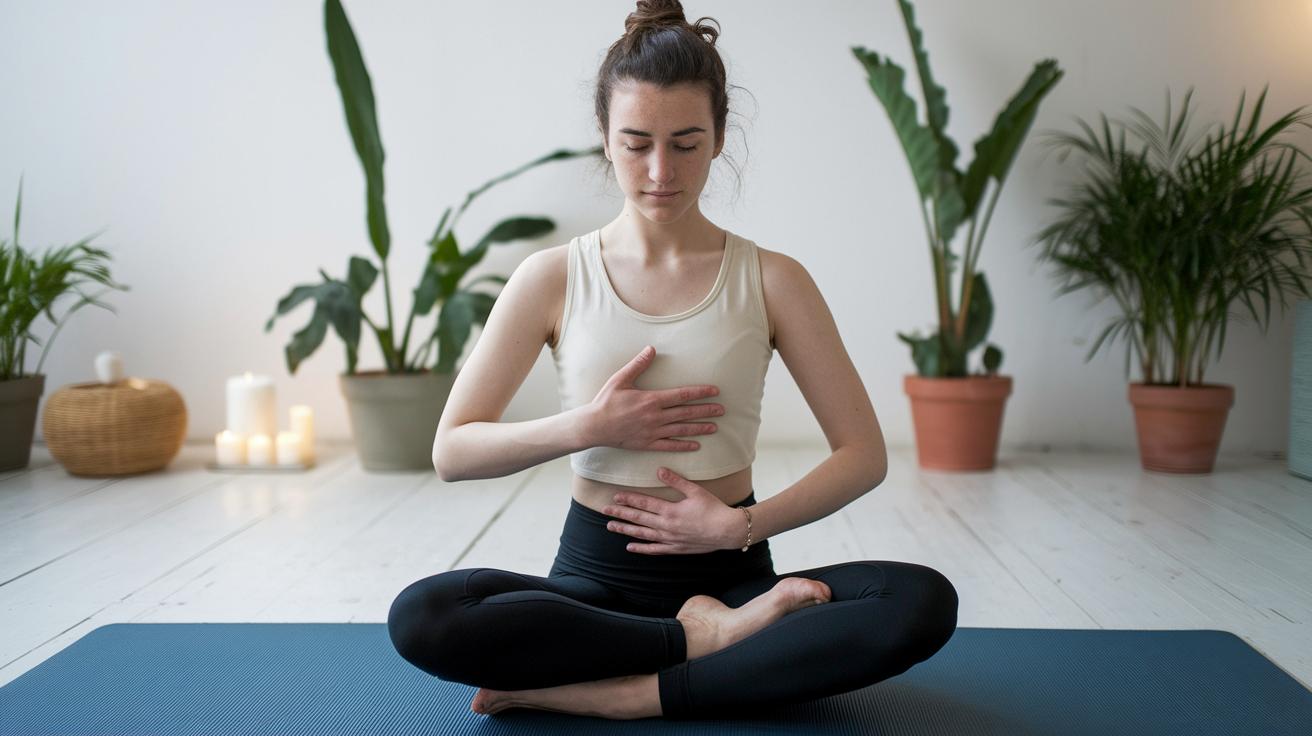
Mindful breathing is a simple way to clear your head, but sometimes it can feel like nothing is going right. You might find your mind wandering, your breathing getting shallow, or your shoulders growing tight. It is normal to hit a bump in the road where your focus slips away too soon. And when that happens, it can feel like calm and clarity are just out of reach.
Here are a few friendlier ways to work around these common challenges:
- Try using a gentle timer or an app reminder. Setting a two-minute alert, for example, can help keep your practice on track.
- Check your posture by sitting up straight and letting your shoulders relax. A soft prompt like “Sit up straight and let your shoulders drop” might be all you need.
- Place one hand on your chest and the other on your belly to encourage deep breathing with your diaphragm. (The diaphragm is a big muscle below your lungs that helps you breathe deeply.)
- If you notice your focus drifting, start with guided audio. Listening to calming, step-by-step instructions can help keep your thoughts anchored.
These tips, when practiced regularly, can help you overcome those little stumbling blocks in your mindful breathing journey. And if you’re looking for extra ideas to manage stress, check out our stress management tips.
Tracking Progress and Sustaining Your Mindful Breathing Routine
Tracking your breathing exercises can help clear your mind and manage stress better. Try noting a few key numbers every time you practice. For example, rate how stressed you feel before and after your session. Also, check your resting heart rate and give yourself a focus score from 1 to 5.
You might want to use a simple breathing app or keep a journal. Note the number of minutes you practiced, the method you used, and how relaxed you felt afterward. Over time, you may see that your focus sharpens and your sense of calm deepens.
Every month, take a look back at your notes. Notice any improvements and decide if you want to extend your sessions or add gentle affirmations while you breathe. It also helps to check your posture regularly so you get the best out of your lung training.
| Metric | Description |
|---|---|
| Stress Score | Rating before/after practice |
| Heart Rate | Measure resting heart rate |
| Focus Rating | Score on a 1–5 scale |
For more tips on overall wellness, check out our wellness guide.
Final Words
In the action of practicing mindful breathing, we explored core techniques like hand tracing, box breathing, belly breathing, and extended exhale, paired with advanced methods such as the 4-2-6 and 4-7-8 patterns. We also shared tips on integrating sessions into your day, overcoming common challenges, and tracking progress for steady growth. Embracing these mindful breathing routines for everyday calm can bring more peace and balance into your life. Stick with these simple yet effective practices, and enjoy a more relaxed, focused day ahead.
FAQ
What is mindful breathing for everyday calm?
The mindful breathing for everyday calm means using controlled breath practices to soothe the nervous system, reducing stress and promoting a balanced state through simple, focused breathing exercises.
What core mindful breathing techniques help with stress relief?
The core mindful breathing techniques include hand tracing, box breathing, belly breathing, and extended exhale breathing. They help calm the body by slowing the heart rate and easing tension.
How do advanced mindful exhalation patterns like the 4-2-6 and 4-7-8 techniques reduce stress?
The advanced mindful exhalation patterns, such as 4-2-6 and 4-7-8 techniques, extend the exhale phase to trigger the relaxation response, lowering tension and promoting a steady, calming rhythm.
How can mindful breathing be easily integrated into daily routines?
Mindful breathing fits into daily life by pairing sessions with everyday activities, such as a short morning box breathing, a midday hand tracing, and an evening 4-7-8 session to smoothly maintain calm.
What common mindful breathing challenges might I face and how can I overcome them?
Common challenges like mind wandering and shallow chest breathing can be managed by using a reminder timer, checking posture, and using guided audio to help focus and fully engage in the breath practices.
How can I track and sustain progress in my mindful breathing routine?
Progress in mindful breathing can be tracked by recording stress levels, heart rate, and focus before and after sessions using apps or journals, allowing you to see improvement and stay motivated.